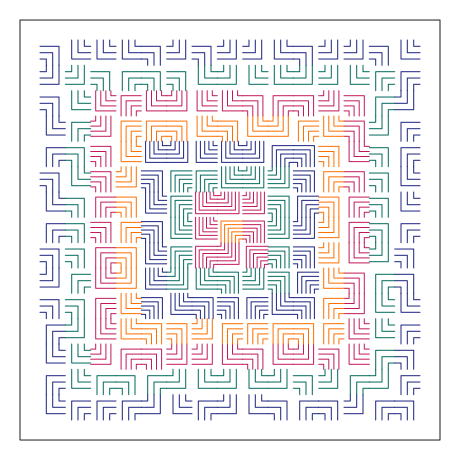
Chevron Truchet, square rings: a 15 x 15 grid banded by Chebyshev distance from the centre, with the four pens cycling every ring so each pass draws a set of nested frames. Chevron count rises from 3 at the edge to 6 at the centre. 854 paths.
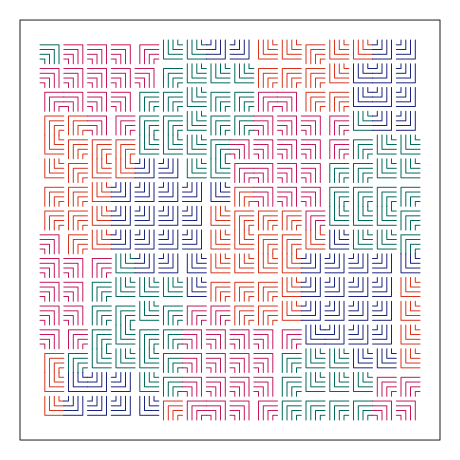
Chevron Truchet, twin wave fields: a 16 x 16 grid where the sign pair of two sine fields picks one of four pens and their sum picks the tile rotation, so the pen regions read as interlocking wave lobes. 1024 paths.
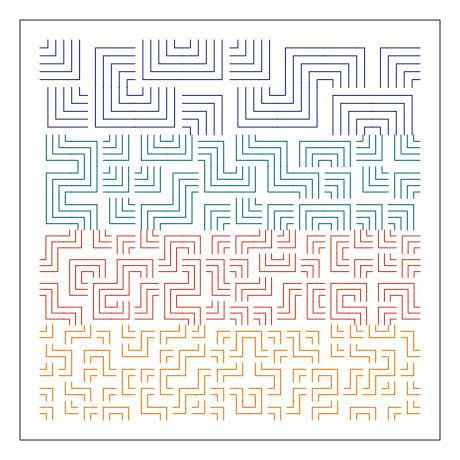
Chevron Truchet, scale registers: four equal 95 px horizontal bands at 2, 3, 4 and 5 rows each, one pen per band, with chevron count following cell size so every register carries the same weight. 616 paths.
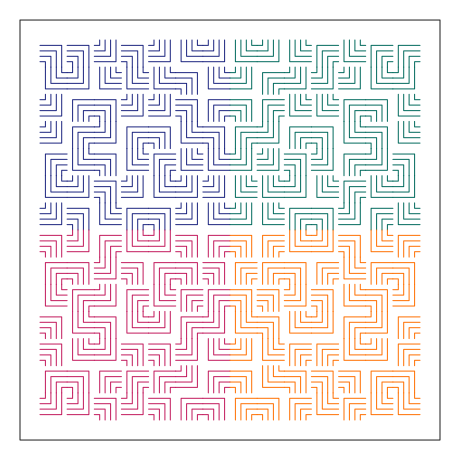
Chevron Truchet, mirrored quadrants: a 14 x 14 tiling generated in the top-left 7 x 7 block and mirrored horizontally and vertically, one pen per quadrant. 784 paths.
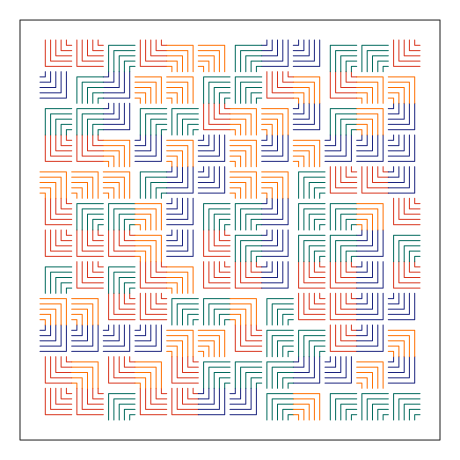
Chevron Truchet, one pen per rotation: a 12 x 12 field of randomly rotated tiles where each of the four pens draws a single tile orientation, so every pass is a scatter of identically oriented nests. 720 paths.
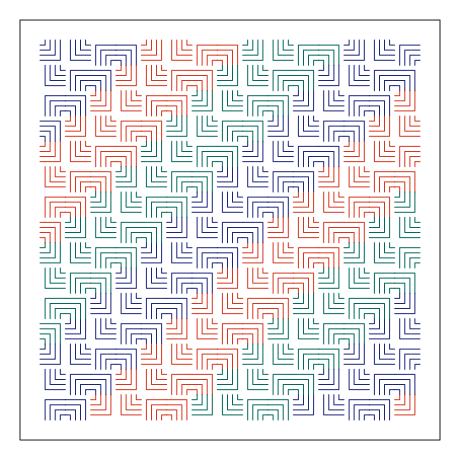
Chevron Truchet, diagonal thirds: a 15 x 15 grid with rotation set by (i+j) mod 4 and the pen by the diagonal band of (i+j) mod 12, giving four-step orientation stripes crossed by three-colour bands. 900 paths.
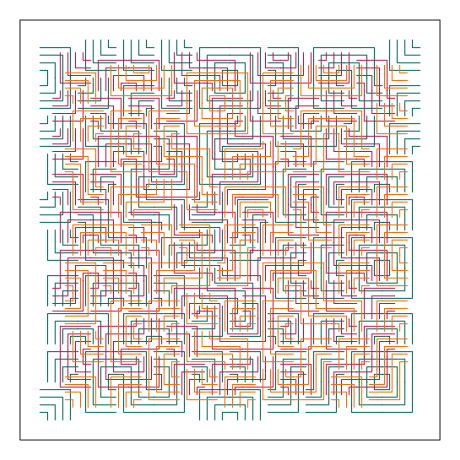
Chevron Truchet, offset triple: three independent tilings at pitch 10, each shifted a third of a cell diagonally and given its own pen, so the three grids interleave without ever sharing a cell edge. 1048 paths.
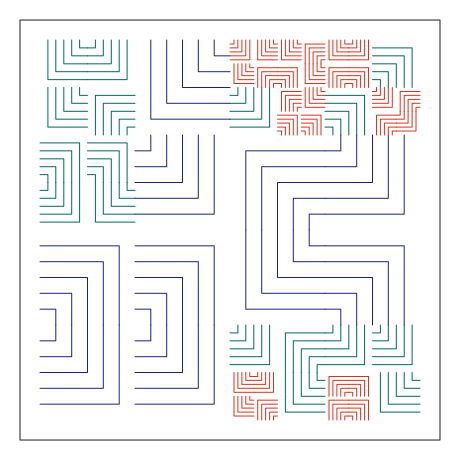
Chevron Truchet, quadtree in three pens: recursive subdivision to depths 2 through 4 with one pen per depth, each leaf carrying a 5-chevron nest at a random rotation. 275 paths.
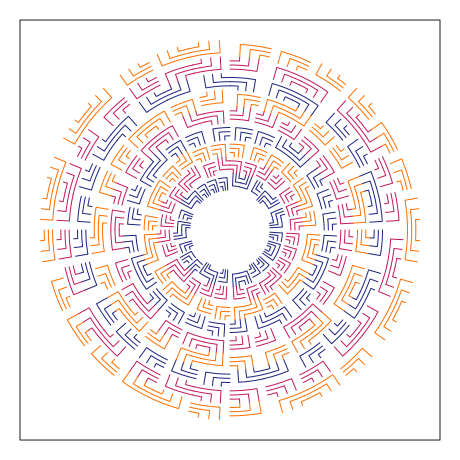
Chevron Truchet, polar rings: 9 rings by 28 sectors with the chevron nests warped into annular cells, pen chosen by ring modulo 3. 756 paths.
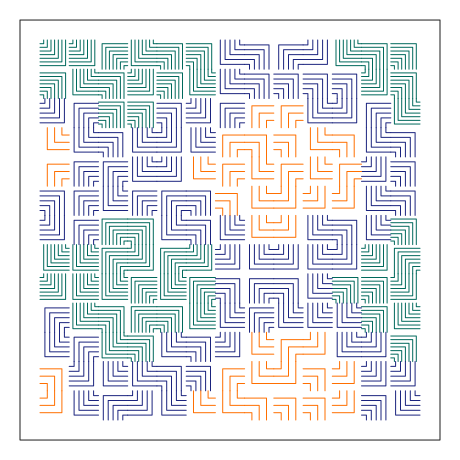
Chevron Truchet, count bands: a 13 x 13 grid where a smooth sine field sets the chevron count to 7, 5 or 3 and the count picks the pen, so line density and colour move together. 869 paths.
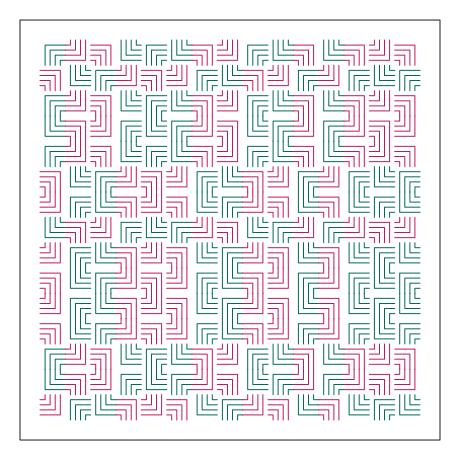
Chevron Truchet, hitomezashi rotation: a 15 x 15 grid where row and column bit parities pick each tile's rotation in the hitomezashi manner, producing long correlated runs of one orientation. 900 paths.
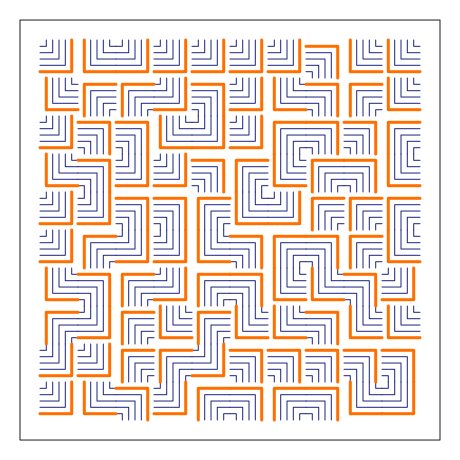
Chevron Truchet, two pen weights: a 10 x 10 grid with the outermost chevron of every tile on a 3 px pen and the inner nest on a 1 px pen, so the heavy pass alone reads as a maze. 500 paths.
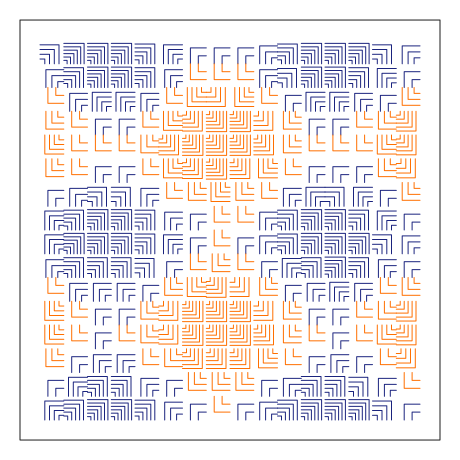
Chevron Truchet, wave field: a 16 x 16 grid where one sine field sets both tile rotation and chevron count, from 2 up to 6 lines, and the sign of the field splits the pens. 924 paths.
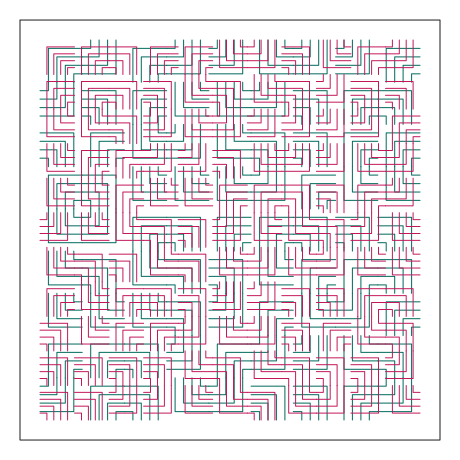
Chevron Truchet, moire: two full tilings overlaid at pitch 9 and pitch 11, one pen each, beating against one another across the sheet. 808 paths.
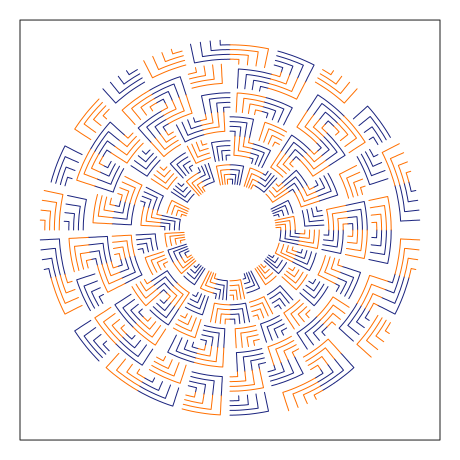
Chevron Truchet, polar: 6 rings by 24 sectors with each chevron nest warped into its annular cell, so the nests fan wider as they move out from the centre. 576 paths.
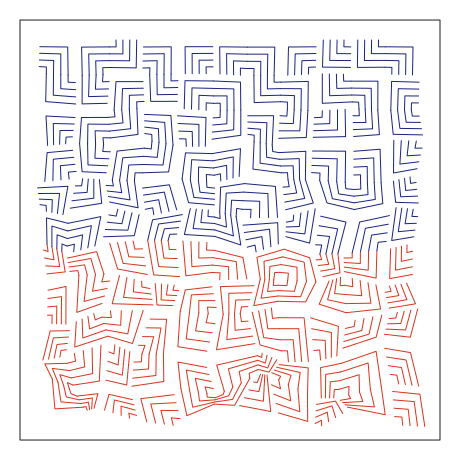
Chevron Truchet after Molnar: an 11 x 11 grid whose vertices are jittered by an amount growing to 0.42 of a cell down the sheet, taking the tiling from ordered at the top to unstable at the bottom. 484 paths.
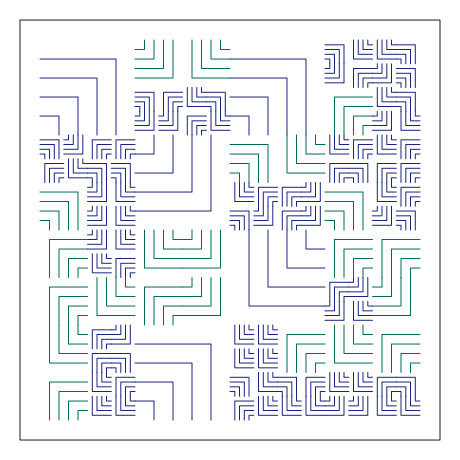
Chevron Truchet, quadtree: recursive subdivision across depths 2 to 4 with the pen following depth parity, mixing three tile scales in one field. 460 paths.
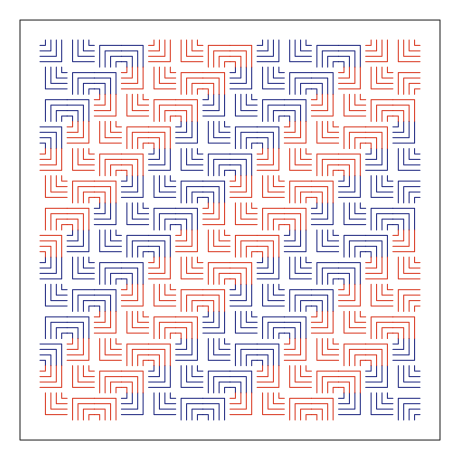
Chevron Truchet, diagonal stripes: a 14 x 14 grid with rotation set by (i+j) mod 4 and the pen banded on (i+j) mod 8, so orientation and colour both run on the diagonal. 784 paths.
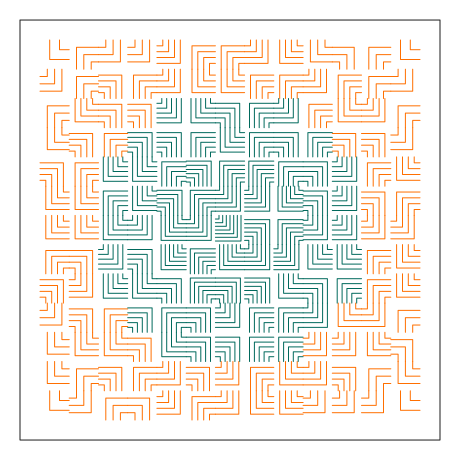
Chevron Truchet, radial density: a 13 x 13 grid where the chevron count falls from 7 at the centre to 2 at the corners, the count band choosing the pen. 731 paths.
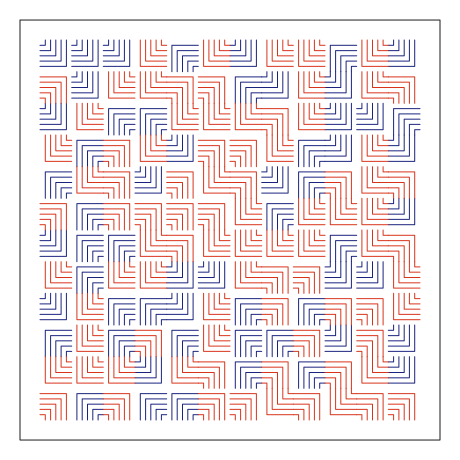
Chevron Truchet, classic field: the 1704 half-filled triangle drawn as a nest of chevrons symmetric about the tile diagonal, on a 12 x 12 grid of uniformly random rotations with 5 chevrons per tile and the pen chosen by orientation class. 720 paths.
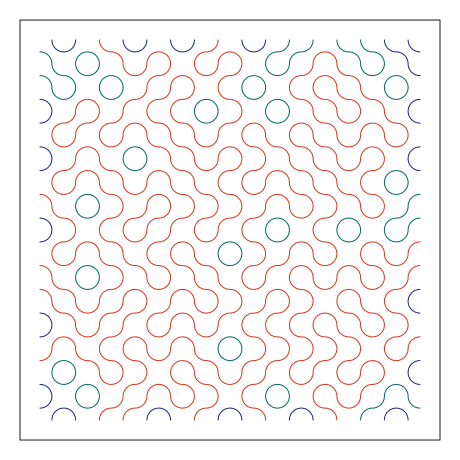
Truchet loops: a 16 x 16 Smith grid with the arcs traced through shared edge midpoints into continuous chains, each chain drawn as one multi-arc stroke. Colour follows chain length in terciles, collapsing 512 arcs into 59 paths.
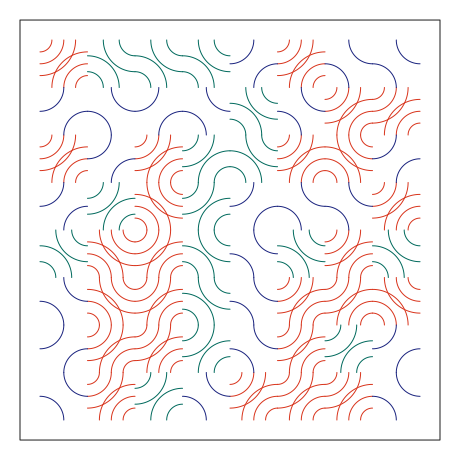
Variable-rail Truchet: an 8 x 8 grid where each cell carries 1, 2 or 3 concentric rails set at k/(n+1) of the cell. Rail count is the colour split. 261 paths.
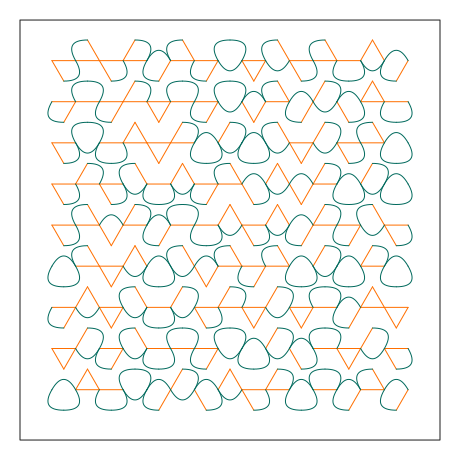
Triangle Truchet, Bezier vs chord: an equilateral lattice of edge 47.5 px where each corner joins the two adjacent edge midpoints by either a quadratic Bezier pulled toward the vertex or a straight chord. Both variants share endpoints, so the tiling stays continuous. 406 paths.
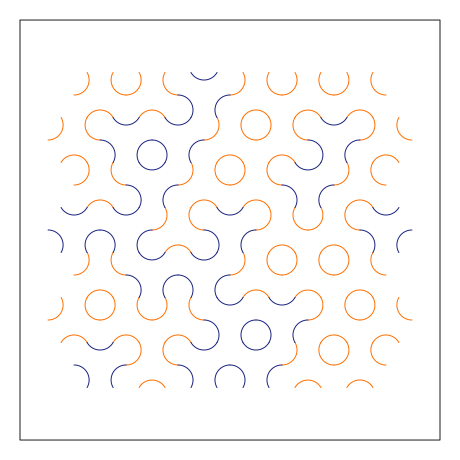
Hex Truchet: a pointy-top lattice with R = 30 px, three 120-degree arcs of radius R/2 centred on alternating vertices, colour split by chirality. Arcs join across hex edges so the two passes interlock. 136 paths.
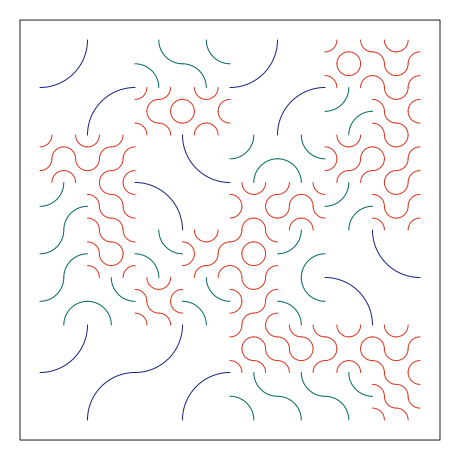
Multi-scale quadtree Truchet: random subdivision at p = 0.55 down to depth 4, one colour per depth at 95 px, 47.5 px and 23.75 px. 231 paths.
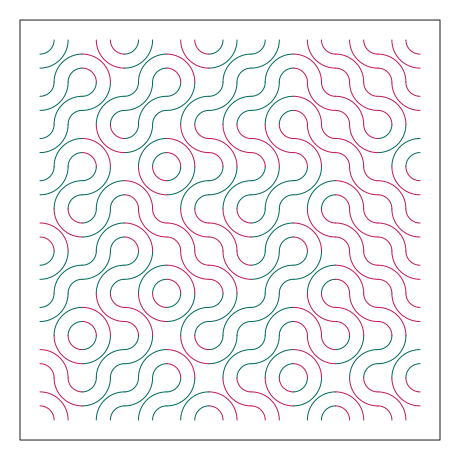
Two-points-per-edge double-rail ribbons: a 9 x 9 grid with rails at r = s/3 and 2s/3, colour split by tile orientation. 325 paths.
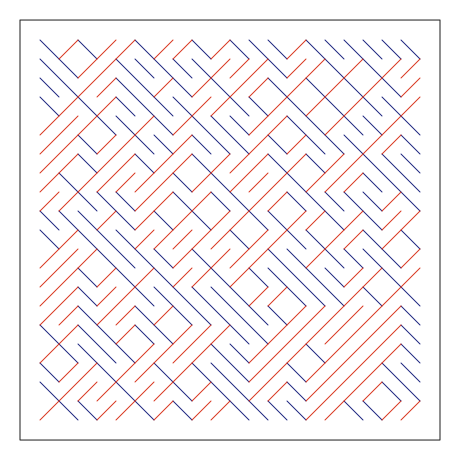
10 PRINT diagonals with collinear runs merged: a 20 x 20 grid where each run of same-direction cells is chained into one continuous stroke, colour split by direction. 800 cells reduce to 210 paths.
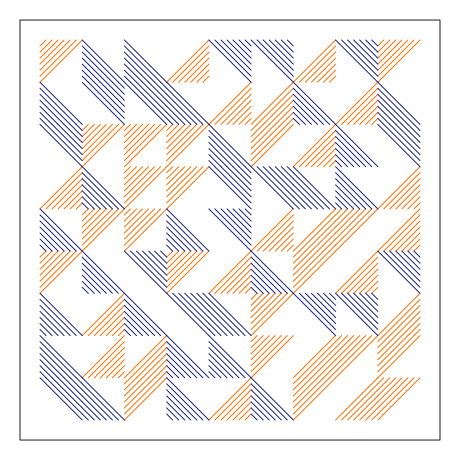
Half-squares as diagonal hatch: a 9 x 9 grid with 7 hatch lines filling one half-square per cell, diagonal and side chosen independently at random. Colour splits on diagonal direction. 568 paths.
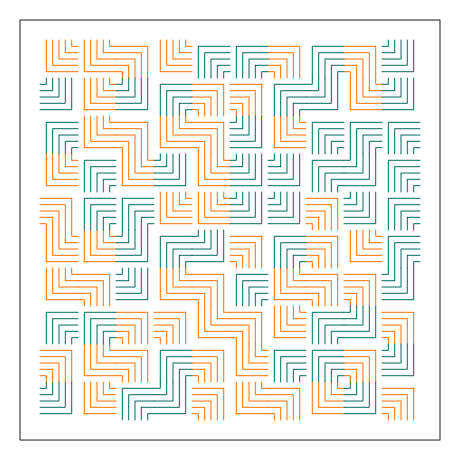
1704 half-squares as concentric corner chevrons: a 10 x 10 grid with 5 nested chevrons per cell across 4 rotations, colour split by rotation parity. 501 paths.
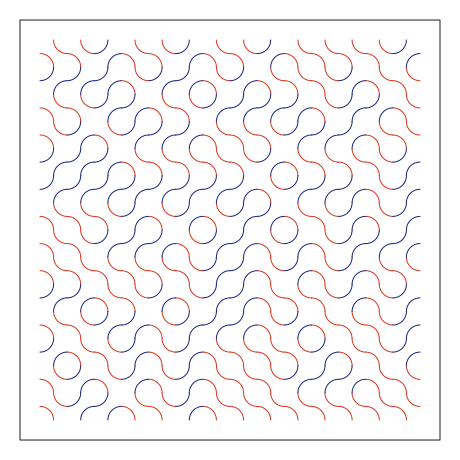
Smith quarter-circle arcs: a 14 x 14 grid of randomly oriented quarter-arc tiles, colour split by orientation. 393 paths.
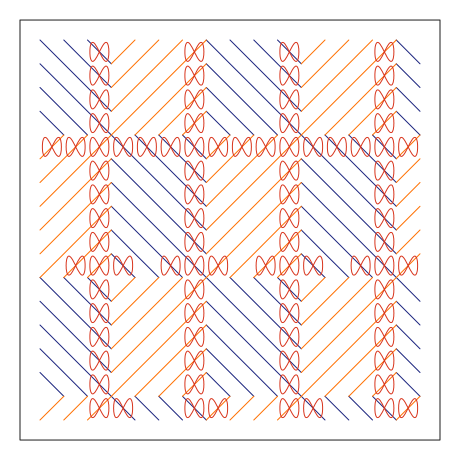
10 PRINT diagonals from a Lissajous field: a 16 x 16 grid where diagonal direction follows the sign of sin(4piu + pi/3)sin(3piv + pi/6) and collinear runs merge into single strokes. Red 1:2 figure-eights mark cells where the field magnitude falls below 0.14, tracing the nodal lines. 201 paths.
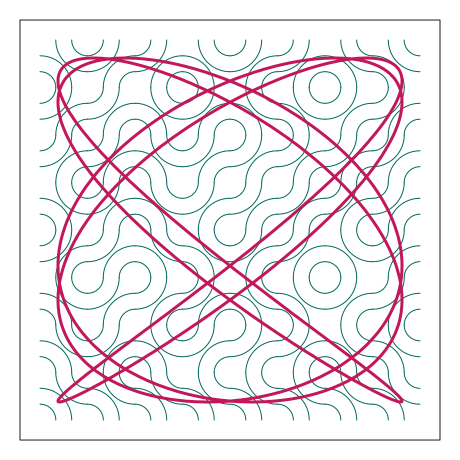
Double-rail ribbon Truchet under a Lissajous overlay: 8 x 8 tiles with two rails at r = s/3 and 2s/3 in teal at 1 px, crossed by a 5:4 Lissajous at R = 172 px drawn as a single 1400-point polyline in magenta at 3 px. 258 paths.
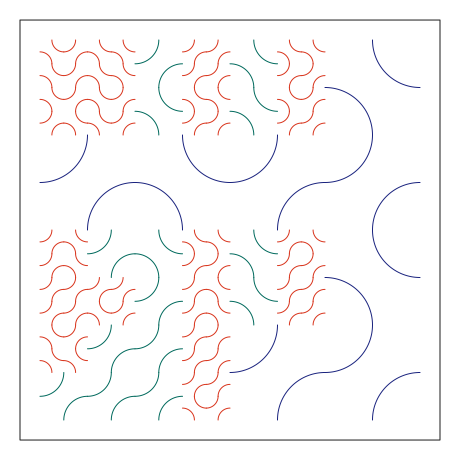
Quadtree Truchet at Lissajous-field antinodes: a cell splits when the mean field magnitude over it exceeds 0.40 then 0.45, giving one colour per depth at 95 px, 47.5 px and 23.75 px. 189 paths.
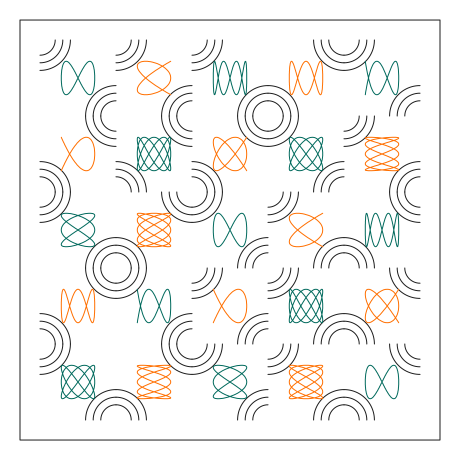
Lissajous grid in triple-rail Truchet cells: 5 x 5 cells, each a three-radius Smith rail tile in black holding a centred Lissajous figure whose frequency ratio cycles through 12 coprime pairs, teal and orange on a checkerboard. 176 paths.
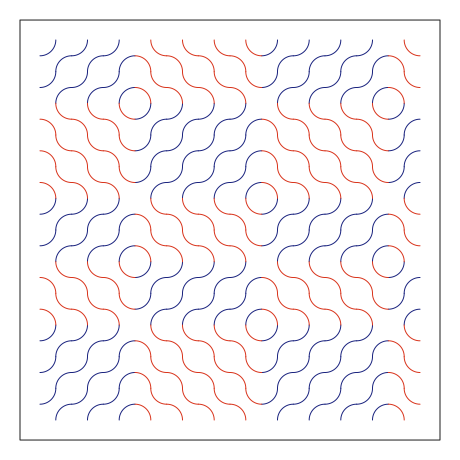
Smith arcs steered by a Lissajous field: 12 x 12 Smith quarter-arc tiles with orientation set by the sign of sin(3piu)sin(5piv), colour split blue and red. 289 paths.
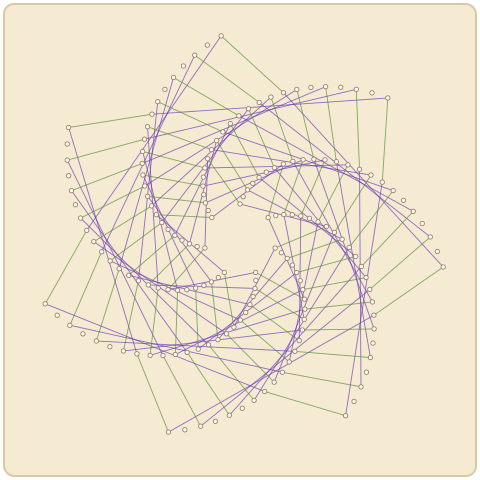
Counterspin: A=7 x M=24, sweep 97.6 deg, spin +1, 126 chords, purple/moss. Opposed webbings in every gap with i stepping by 2, +7 purple then -7 moss, the two shears running against each other to weave a seven-fold turbine.
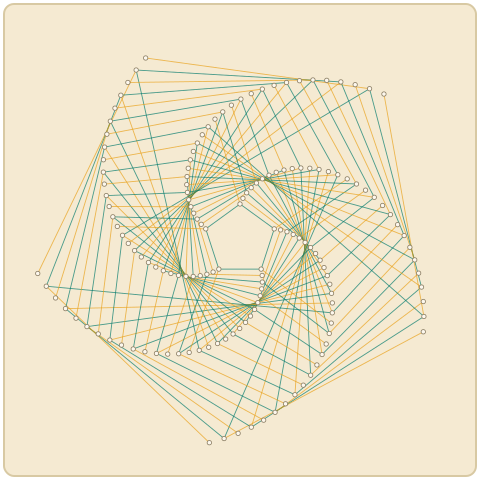
Moire5: A=5 x M=30, sweep 116.6 deg, spin +1, 150 chords, teal/gold. Cross-arm times-table (a,i) to (a+1, 2i mod 30) in every gap, teal for even i and gold for odd, nested rotating pentagons with a moire heart.
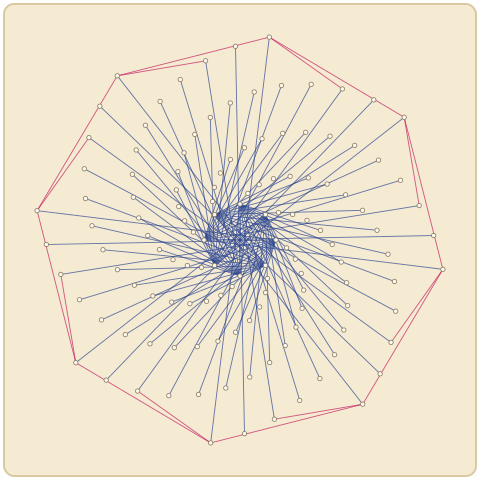
Hubbloom: A=8 x M=16, sweep 143.2 deg, spin +1, 112 chords, indigo/magenta. Hub-anchored fans (a,0) to (a+1,j) for j = 4..15 in indigo, then a magenta double tip ring, eight fans blooming from the center inside a doubled rim.
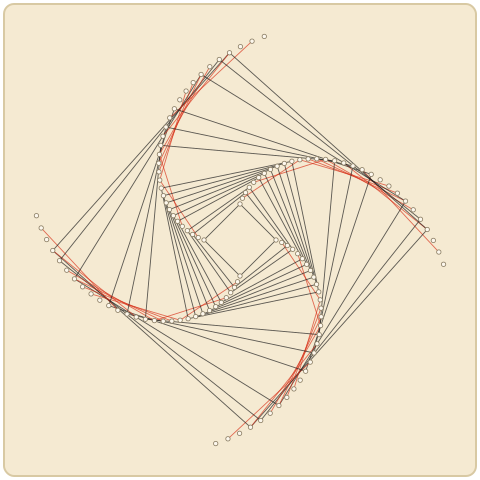
Binarygate: A=4 x M=30, sweep 96.8 deg, spin +1, 92 chords, black/vermilion. The first 30 fractional binary digits of e gate each index, a 1 bit throwing a black rung and a 0 bit hanging a vermilion within-arm envelope, twisted concentric quadrilaterals with red arcs riding the arms.
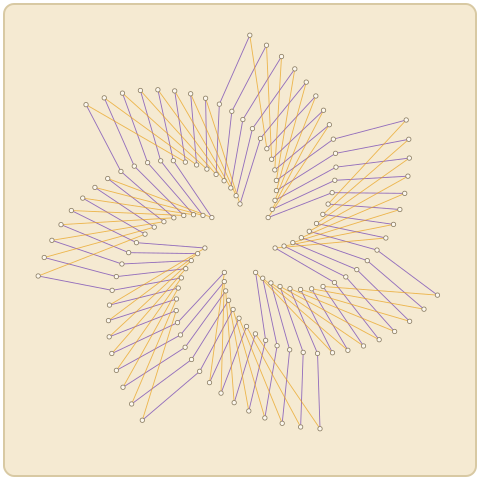
Fibweave: A=7 x M=21, sweep 100.1 deg, spin -1, 147 chords, purple/gold. Both Fibonacci shifts layered in every gap, +8 purple then +13 gold, the two rulings crossing into lace around a seven-point hub void.
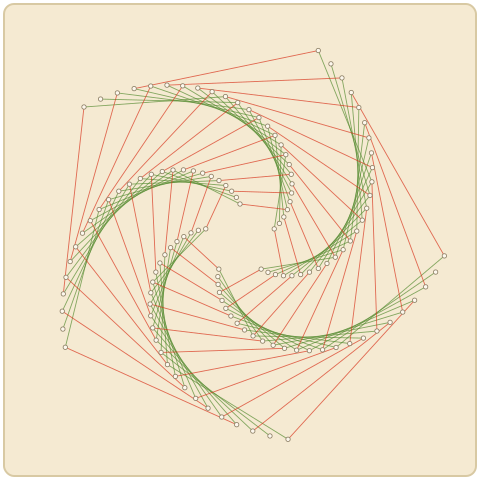
Fernfrond: A=5 x M=26, sweep 121.6 deg, spin -1, 145 chords, moss/vermilion. A moss spine envelope (a,i) to (a,i+9) in every arm, then vermilion barbs (a,i) to (a+1,i+3) for even i, five feathered fronds inside a red web.
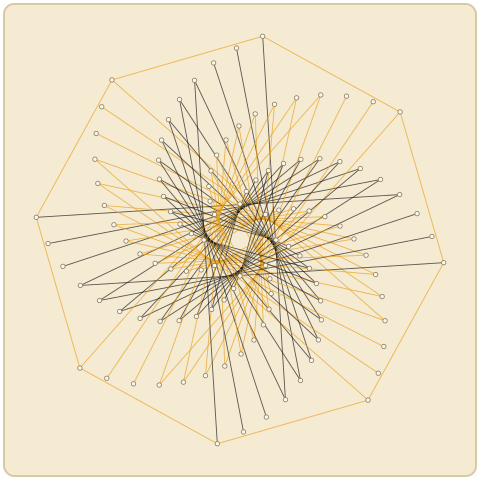
Octostar: A=8 x M=14, sweep 96.3 deg, spin +1, 96 chords, black/gold. Opposite-arm stars (a,i) to (a+4,i+3) colored by arm parity plus a gold tip ring, long diameters braiding through the hub into a galaxy core.
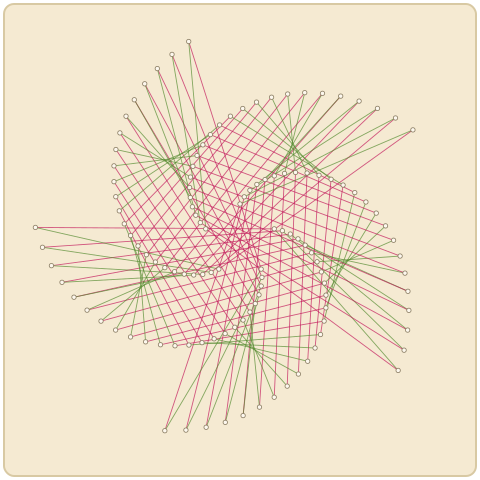
Pentapetal: A=5 x M=24, sweep 129.5 deg, spin +1, 120 chords, magenta/moss. Mirrored-index petals (a,i) to (a+1,23-i) in every gap, magenta where i < 12 and moss otherwise, dense lens petals weaving into a swirled star.
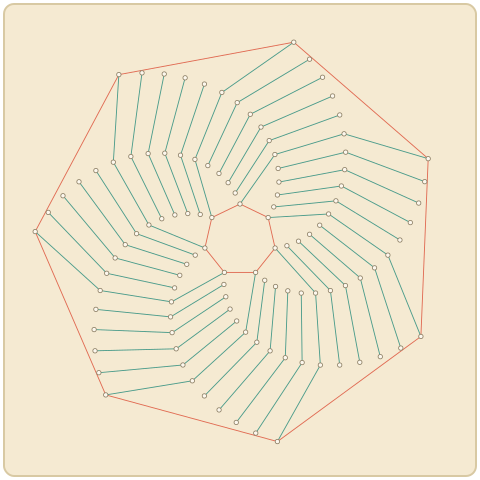
Heptaweb: A=7 x M=16, sweep 87.7 deg, spin -1, 91 chords, teal/vermilion. Ruled webbing (a,i) to (a+1,i+5) in every gap, then a hub ring and a tip ring in vermilion, a combed pinwheel inside a heptagon rim.
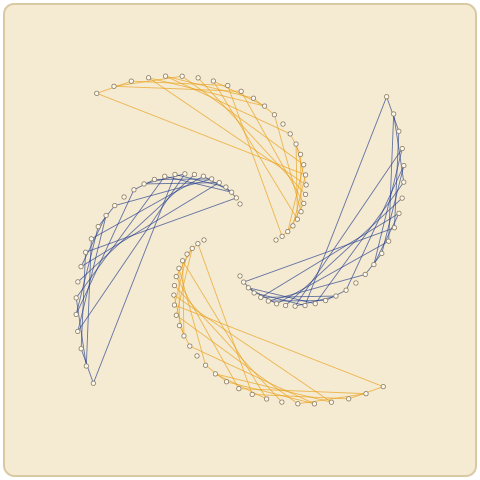
Quadloop: A=4 arms x M=28 holes, sweep 134.3 deg, spin -1, 100 chords, indigo/gold. Within-arm times-table hole i to hole 3i mod 28 in every arm, even arms indigo and odd arms gold, so each arm folds into its own cardioid-like crescent.
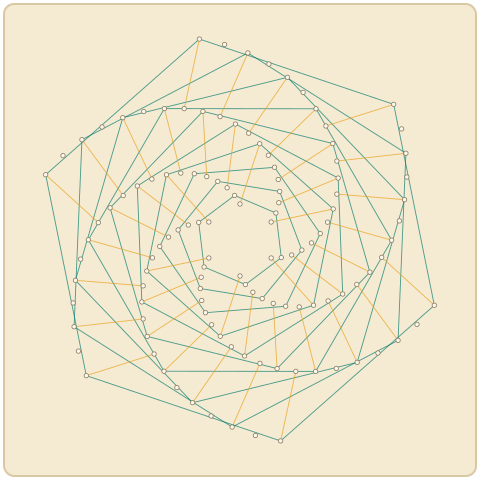
Weave: odd-index rung rings as warp with shift-7 webbing as weft, a basket-woven polygonal spiral. 102 chords, teal/gold, sweep 131.4 deg, spin -1.
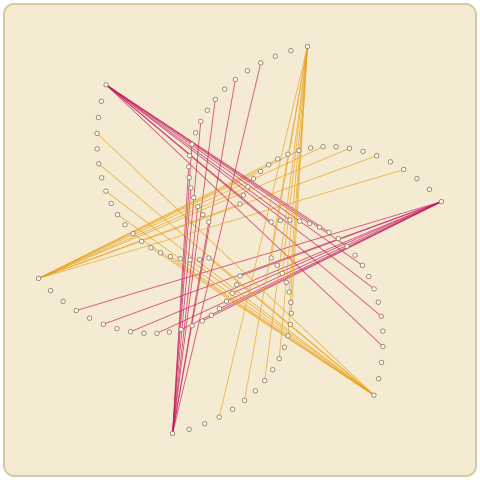
Burst: each arm's outermost tip fans across the hub to the opposite arm, six long-chord star bursts crossing at the center. 54 chords, magenta/gold, sweep 79.2 deg, spin +1.
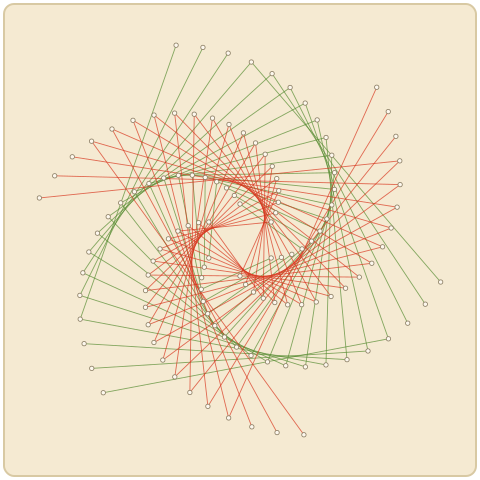
Duet: two interleaved triangle spirals, even arms chained (a,i)-(a+2,i+3) and odd arms (a,i)-(a+2,i-3), counter-shifted so the two colors swirl against each other. 102 chords, moss/vermilion, sweep 138.2 deg, spin -1.
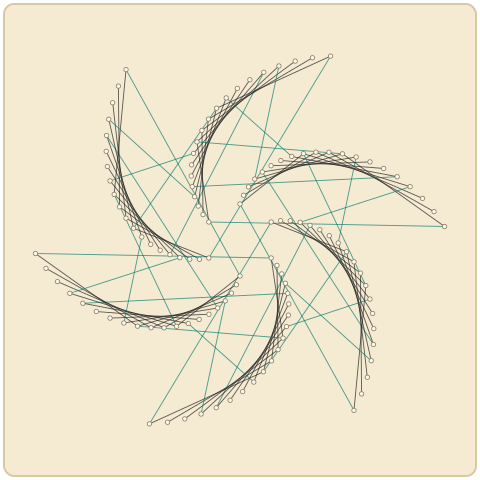
Helix: within-arm skip-8 envelopes redraw each arm as a feathered blade, with sparse teal mirrored petals webbing the gaps. 102 chords, black/teal, sweep 86.2 deg, spin +1.
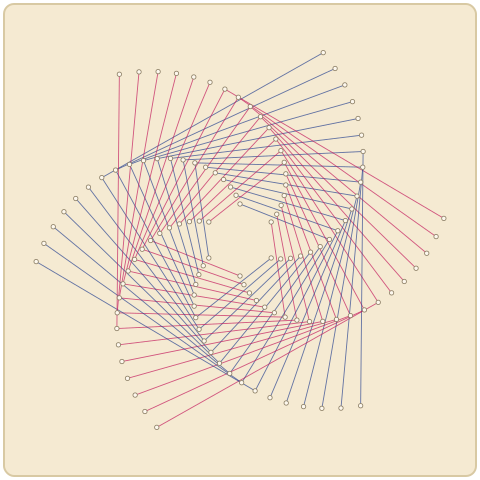
Galaxy: skip-an-arm webbing (a,i)-(a+2,i+6), long chords vaulting over the neighbor arm into an iris aperture. 84 chords, indigo/magenta, sweep 96.0 deg, spin -1.
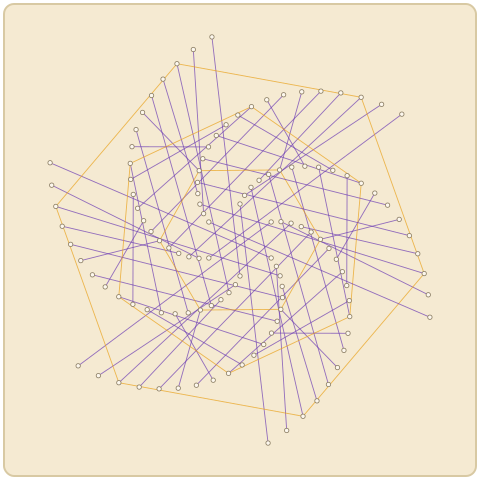
Lace: mirrored-index petals (a,i)-(a+1,19-i) laid over three gold rung rings, a lens of purple net per gap. 78 chords, purple/gold, sweep 112.1 deg, spin +1.
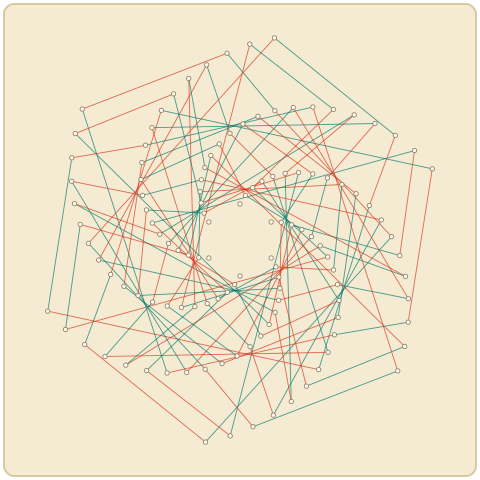
Vortex3: cross-arm times-table i to 3i mod 20 against the next arm, color by arm parity, envelope interference twisted around the hub. 114 chords, teal/vermilion, sweep 129.7 deg, spin +1.
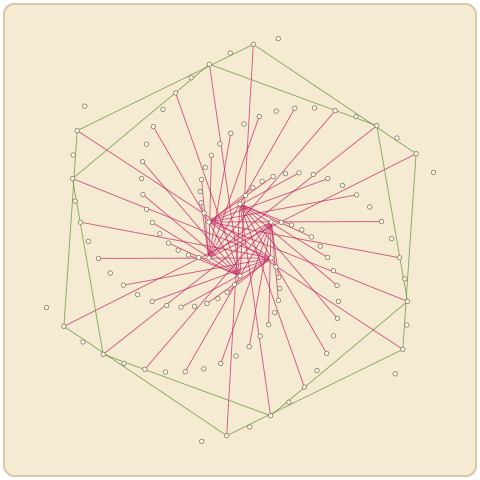
Bloom: each arm's innermost hole fans out to the next arm as a hub bloom, under two rim rung rings that close the flower. 66 chords, magenta/moss, sweep 130.8 deg, spin +1.
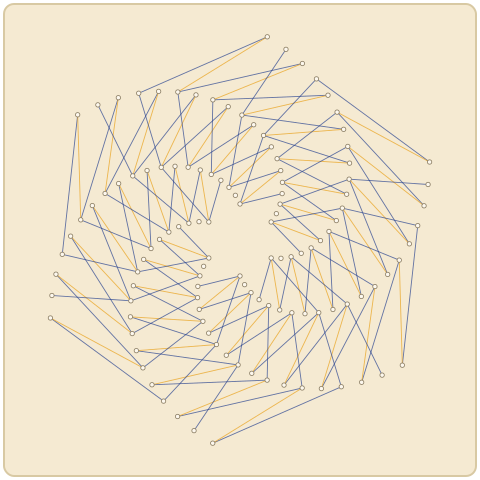
Fib: cross-arm webbing at Fibonacci shifts 3, 5, 8, color by shift parity, three ruled surfaces interleaved in every gap. 138 chords, indigo/gold, sweep 112.4 deg, spin -1.
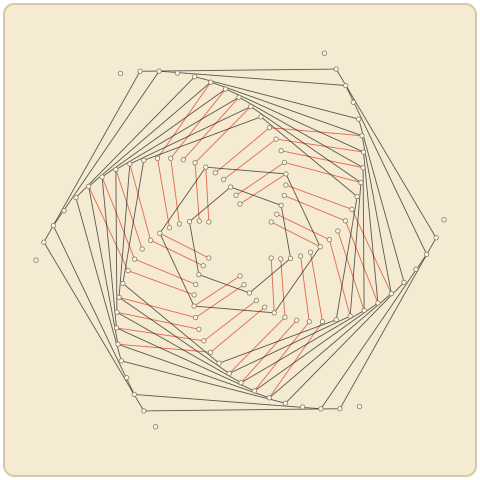
Gatepi: the first 20 binary digits of pi gate each ring, a 1 bit threads the same-index rung ring and a 0 bit throws a shift-5 web chord instead. 108 chords, black/vermilion, sweep 95.7 deg, spin -1.
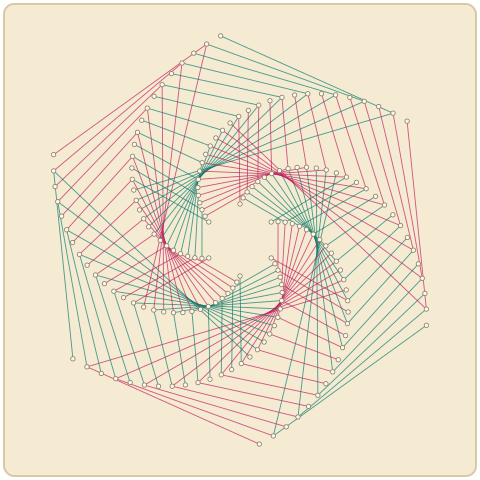
Moire: the times-table thrown across arms, (a,i)-(a+1,2i mod 28), envelope interference between neighboring arms. 162 chords, teal/magenta.
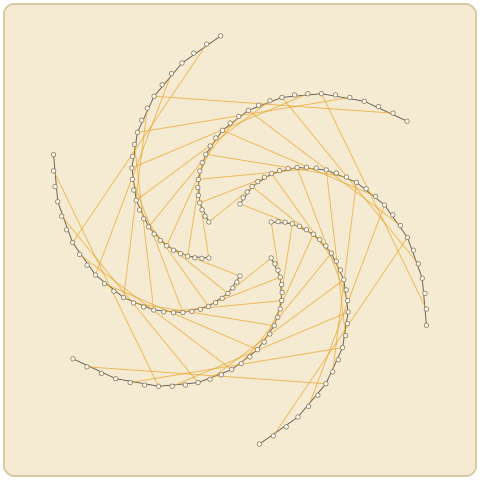
Fronds: a skip-3 spine along each arm plus backward barbs to the previous arm, six feathery fronds. 102 chords, black/gold.
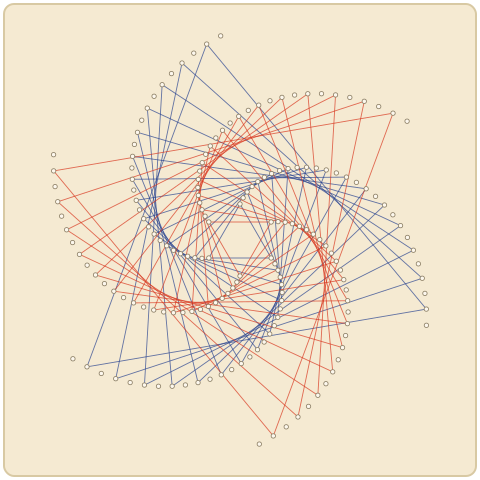
Hexagram: even arms chained to even, odd to odd, two interlocking triangular spirals in opposing colors. 84 chords, indigo/vermilion.
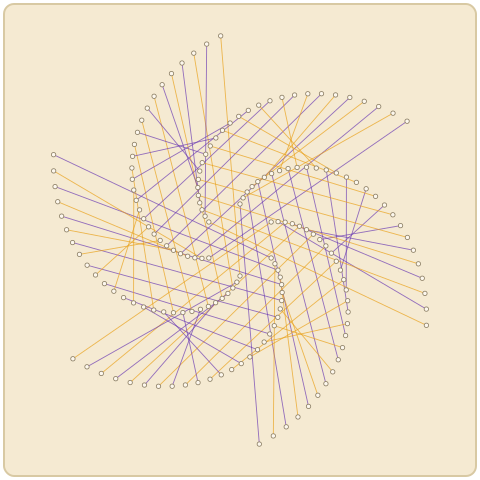
Petals: mirrored-index chords (a,i)-(a+1,27-i) weave a lens petal into every gap. 84 chords, purple/gold.
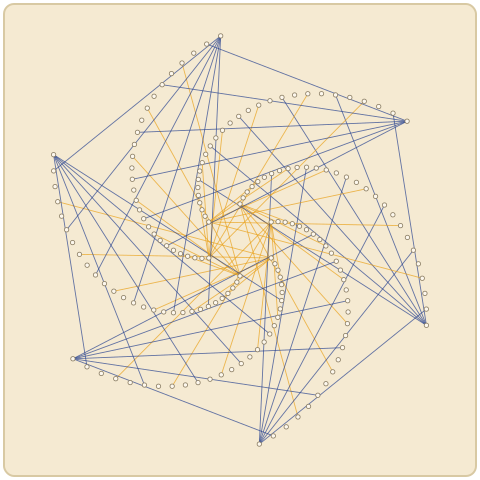
Fans: each arm's inner end fans forward to the next arm, a gold bloom at the hub, while its outer tip fans back to the previous arm as an indigo outer web. 72 chords, gold/indigo.
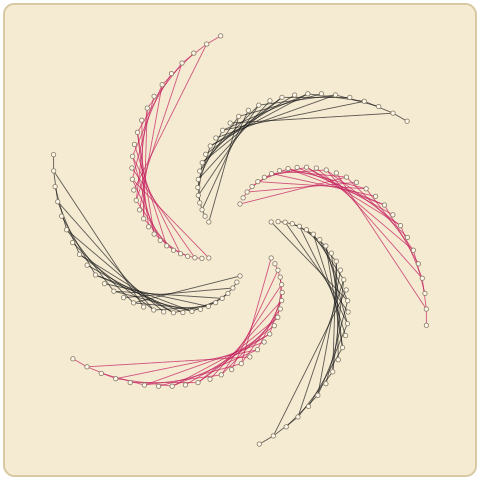
Times2: the i to 2i mod 28 times-table folded along each arm, a cardioid envelope per arm. 162 chords, magenta/black.
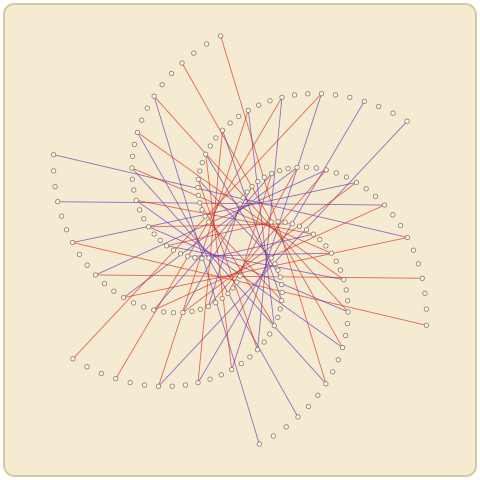
Star: shift-6 chords to the opposite arm cross at the hub into a rotating star web. 48 chords, purple/vermilion.
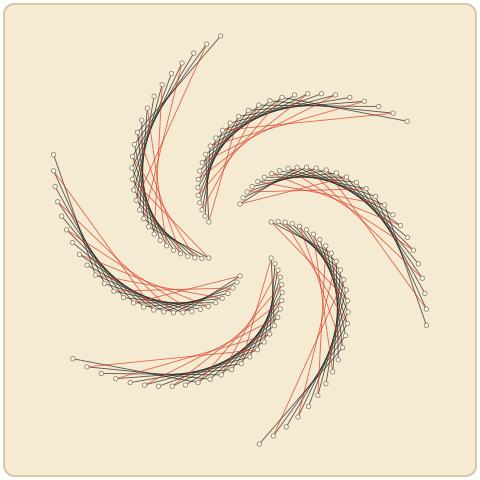
Arms: two within-arm skip families, 9 and 14, hang nested offset envelopes inside each arm, the frame drawn purely from itself. 156 chords, black/vermilion.
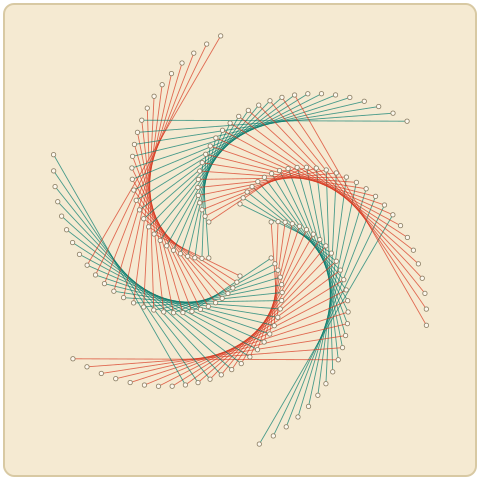
Web: shift-8 cross-arm webbing fills each gap with a ruled surface, color by arm parity. 120 chords, teal/vermilion.
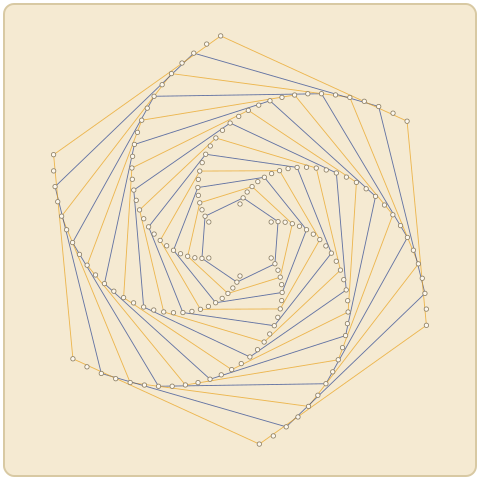
Rungs: same-index chords between adjacent arms at every other i, one twisted hexagonal ring per index, color by ring parity. 84 chords, indigo/gold.
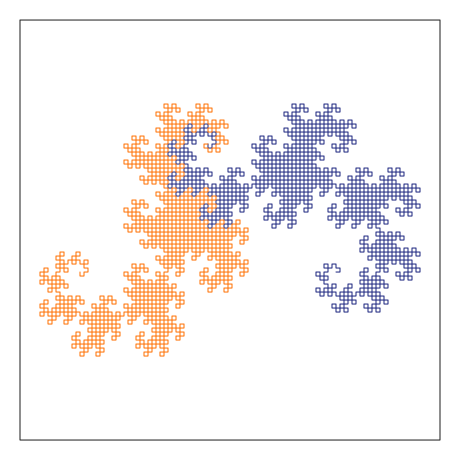
plotset18_dragon: order-12 dragon curve, 4096 segments fit to the content box and drawn as just two continuous polylines, the first half indigo and the second orange, meeting at the fold point.
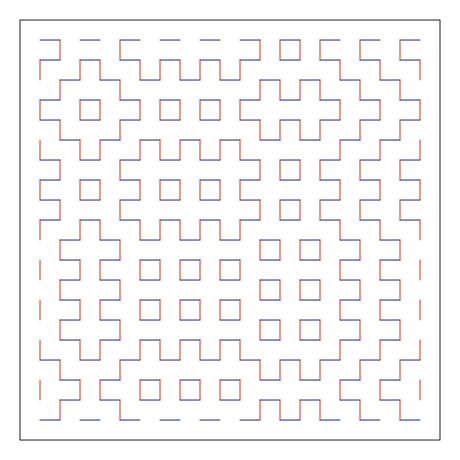
plotset17_hitomezashi: hitomezashi stitch field on a 19-cell grid, row and column dash offsets taken from the binary digits of pi and e. Horizontal stitches indigo, vertical red, each pass a pure one-direction dash field.
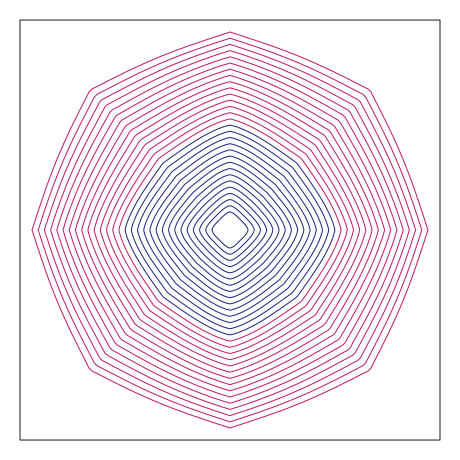
plotset16_superstack: superformula morph stack, 30 concentric outlines blending from a pinched m = 4 diamond to a soft m = 8 octagon while the radius grows. Inner 15 rings indigo, outer 15 magenta.
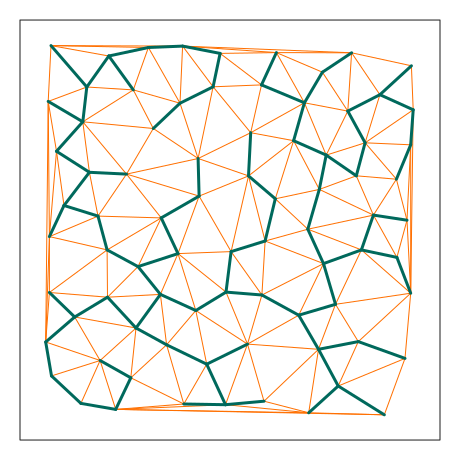
plotset15_spangraph: 80 dart-throw points, brute-force Delaunay triangulation as the orange stroke-1 web, and its Kruskal minimum spanning tree redrawn in teal stroke 3, so the heavy pass is the skeleton hiding inside the light one.
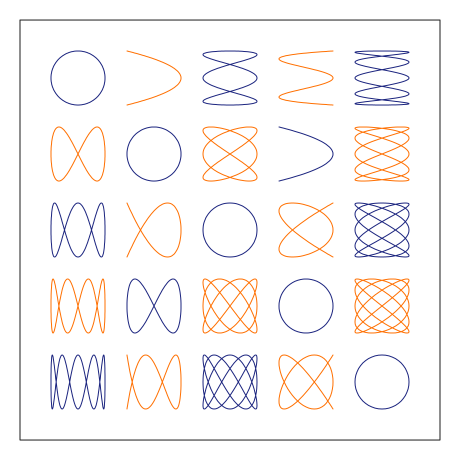
plotset14_lissagrid: 5x5 Lissajous grid where cell (i, j) traces frequencies (i+1, j+1) with a 90-degree phase, giving circles on the diagonal and tightening weaves off it. Checkerboard parity splits indigo and orange.
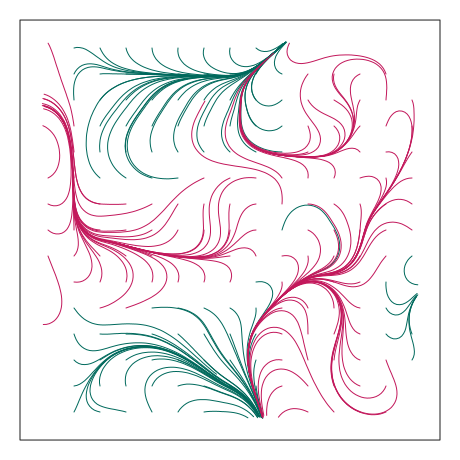
plotset13_flowfield: value-noise flow-field streamlines, about 55 Euler steps each from a jittered seed grid. Streamlines that drift net east are teal, westbound ones magenta, so the passes split into two interleaved feather systems.
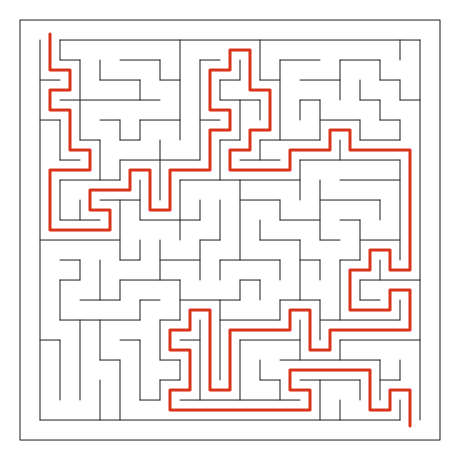
plotset12_maze: 19x19 recursive-backtracker maze, walls as black stroke-1 segments merged into long runs, and the BFS solution from entrance to exit as a single red stroke-3 polyline through the cell centers.
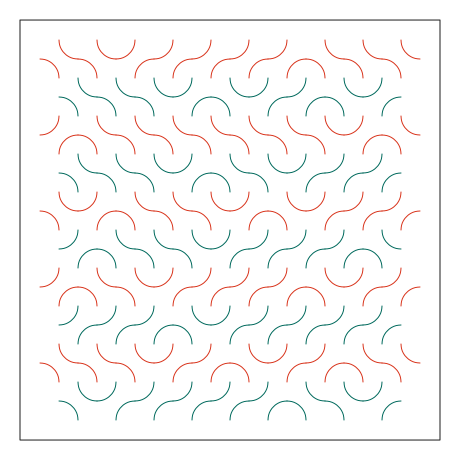
plotset11_bricktruchet: Smith quarter-circle arc tiles on a brick-offset grid, odd rows shifted half a cell so arcs meet edge midpoints in a staggered bond instead of a square lattice. Row parity splits red and teal.
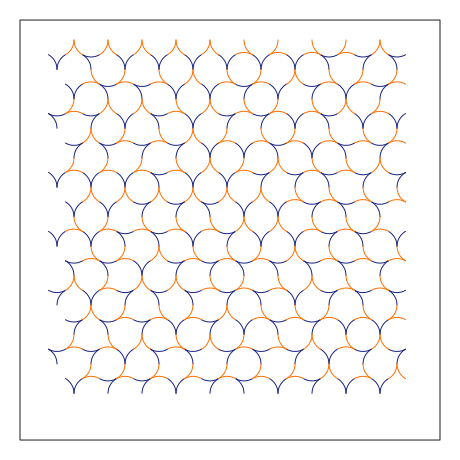
plotset10_tritruchet: triangle Truchet on an equilateral lattice, s = 34, each triangle drawing vertex arcs that join edge midpoints at two of its three corners with the skipped corner chosen at random. Upward triangles indigo, downward orange, chaining into a pearl-net of circles and waves.
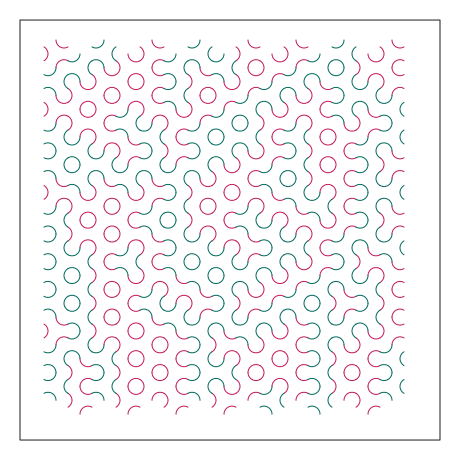
plotset9_hexatruchet: hex Truchet on a flat-top hexagon grid, R = 16, each hexagon drawing three arcs centered on alternating vertices. The two rotation states are the color split, so each pass is one state class of the meander loops.
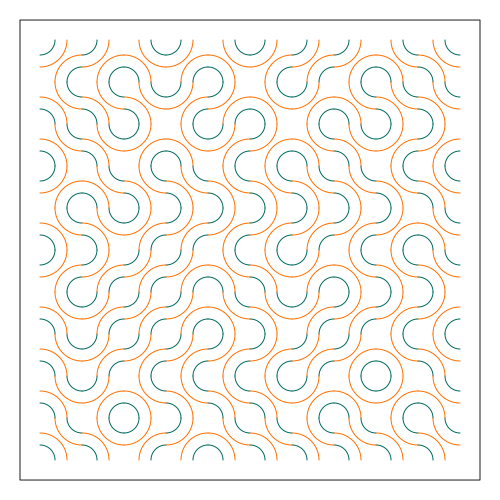
plotset8_ribbonarcs: Nijhoff's two-points-per-edge variant, each corner carrying two concentric arc rails at C/2 - 6 and C/2 + 6, forming continuous double-line ribbons across the whole grid. Inner rail teal, outer rail orange, 10x10 grid, stroke 1.
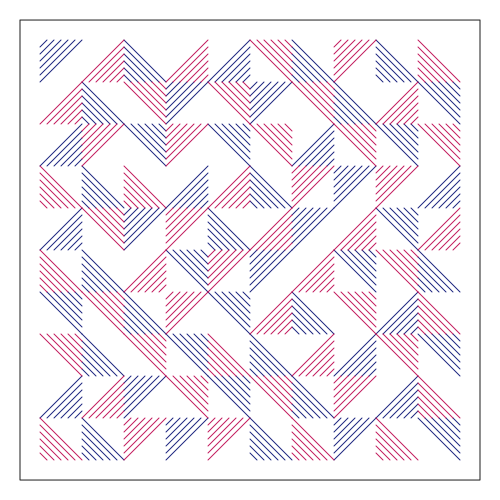
plotset7_chevrontri: the classic 1704 half-filled triangle tile translated to pen work, the filled half becoming 6 concentric chevron lines parallel to the diagonal and shrinking into a random corner. Checkerboard parity splits indigo and magenta, 10x10 grid, stroke 1.
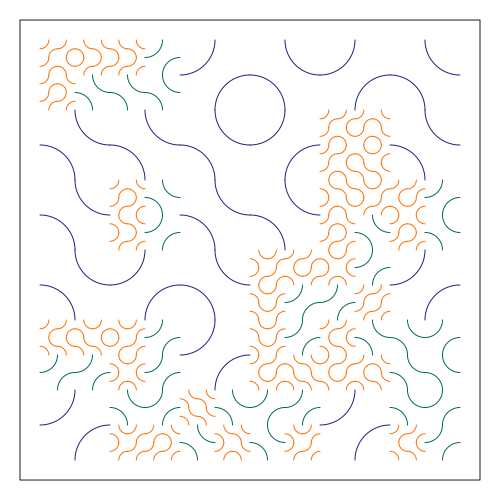
plotset6_multiscale: multi-scale Truchet after Carlson's subdivision idea, a 6x6 grid where each cell recursively splits into quadrants, p = 0.45 and depth at most 2, every leaf getting Smith arcs at its own scale. Color encodes depth: indigo 70 px tiles, teal 35 px, orange 17.5 px.
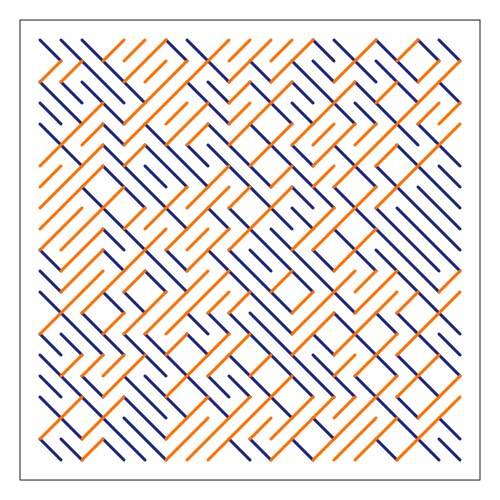
plotset5_tenprint: 10 PRINT diagonal maze, 20x20 grid, stroke 3. Slash and backslash cells split the colors; collinear neighboring diagonals are merged into single long strokes so the pen draws runs, not 400 short dashes.
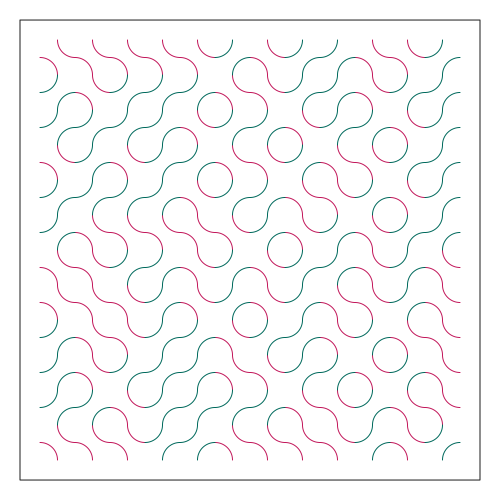
plotset4_smitharcs: Smith arc tiles, 12x12 grid, stroke 1. Two quarter arcs join edge midpoints; the two tile orientations are the color partition, so each pass is one orientation class.
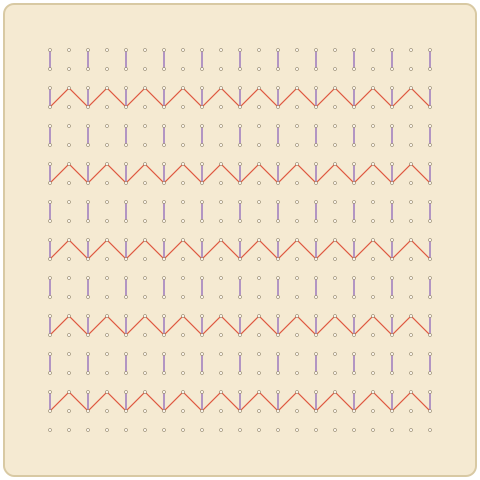
Kuguri-zashi: a purple foundation of dashed verticals on every second column, then a vermilion thread zigzagging across five bands, passing under the foundation stitches rather than through the card. 210 stitches.
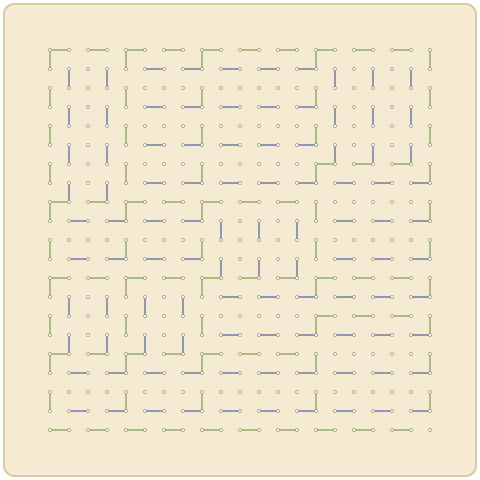
Boro: the card split into patches by recursive binary cuts, each patch filled with parallel running stitch in indigo, and every patch edged with a dashed moss outline. 200 stitches.
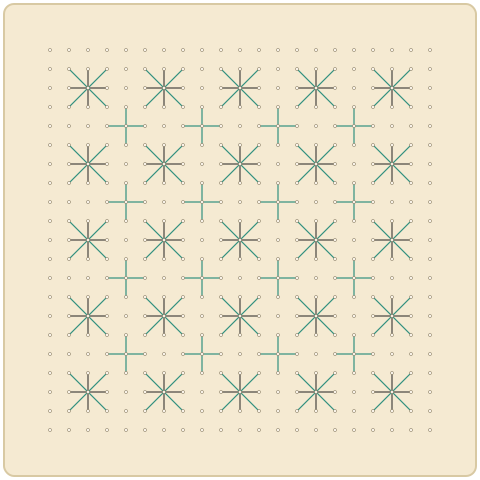
Komezashi: rice asterisks of eight unit arms on a 4-cell lattice, upright arms black and diagonal arms teal, with a teal cross dropped between every four. 232 stitches.
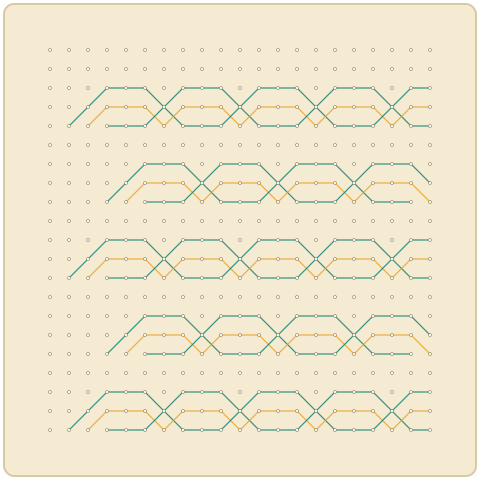
Seigaiha: blue-sea waves as three nested caps per scale on a staggered lattice, outer and inner rings teal and the middle ring gold. 256 stitches.
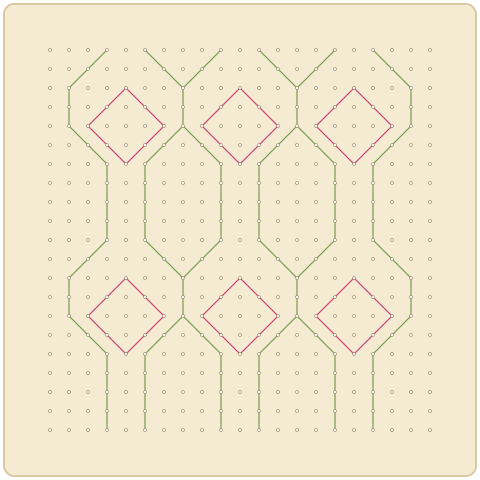
Tatewaku: three rising-steam channels, each a pair of moss verticals bulging outward and closing again, with a magenta diamond set inside every bulge. 160 stitches, the sparsest piece here.
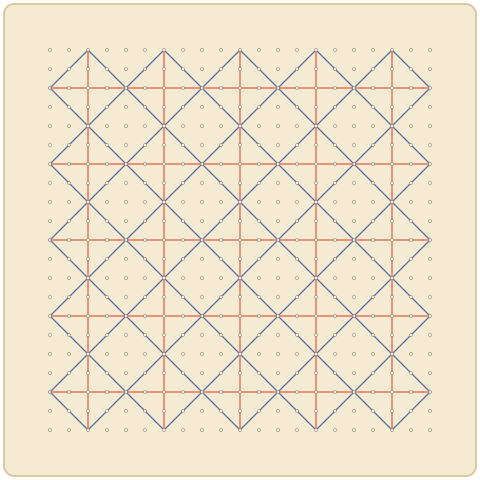
Asanoha: vertex-touching diamonds in indigo with vermilion spokes from each centre to its four corners, the hemp-leaf radial burst. 400 stitches.
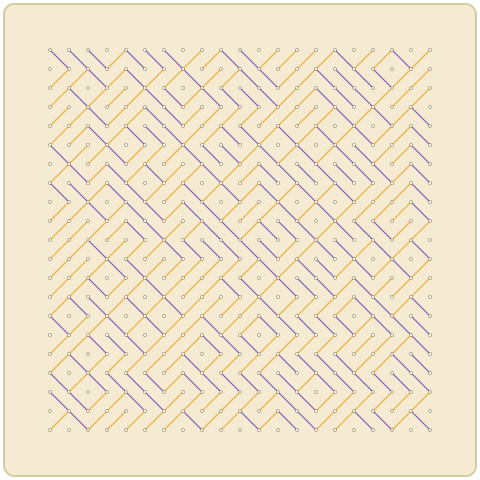
Ten-print diagonals: one diagonal stitch per cell, direction from a seeded coin flip, backslashes purple and slashes gold. 400 stitches, one per cell of the field.
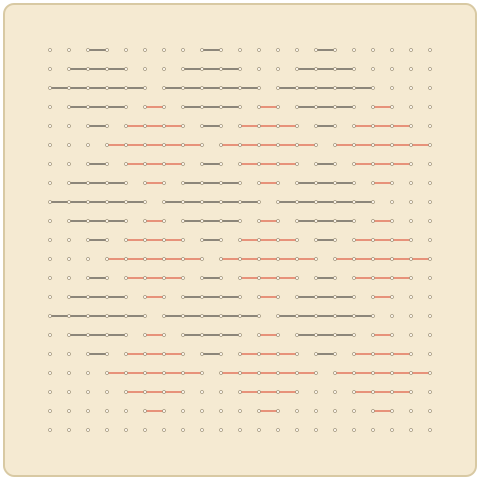
Kogin-zashi modoco diamonds: counted rows of odd-length horizontal dashes, 1, 3, 5, 3, 1, stacked into diamonds on a 6-cell lattice, with a second lattice offset by three cells in both directions worked in vermilion. 234 stitches.
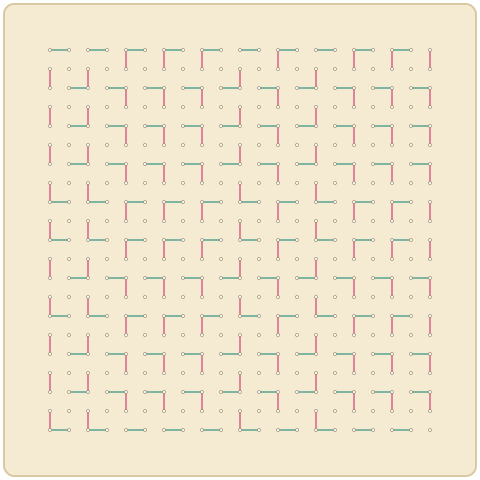
Dilute hitomezashi: the same construction run on only every second row and column, so every visited hole has degree two and the field opens into loops instead of a solid maze. 220 stitches, phases from the binary digits of sqrt(2) minus 1 and of ln 2.
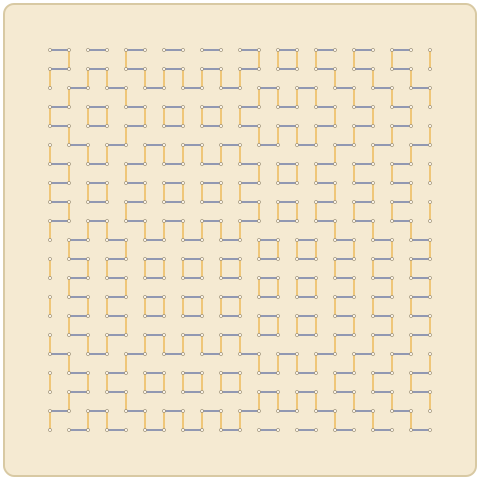
Hitomezashi phase maze: the full field, every row dashed from a phase given by the binary digits of pi, every column from those of e, rows indigo and columns gold. 420 stitches, the densest driver the budget allows.
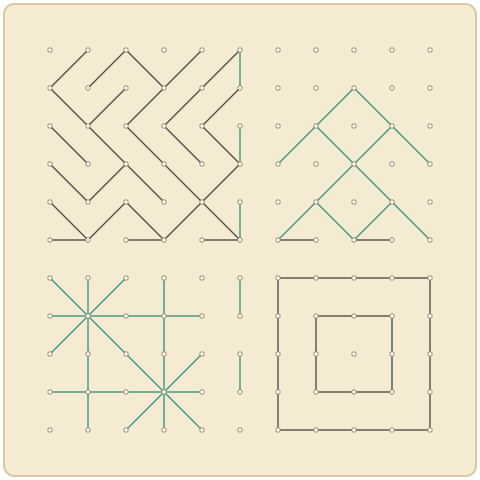
Fukin sampler: one mini-pattern per quadrant - ten-print diagonals, seigaiha wave caps, komezashi crosses, masu squares - with divider dashes on the center lines. 79 stitches, black/teal.
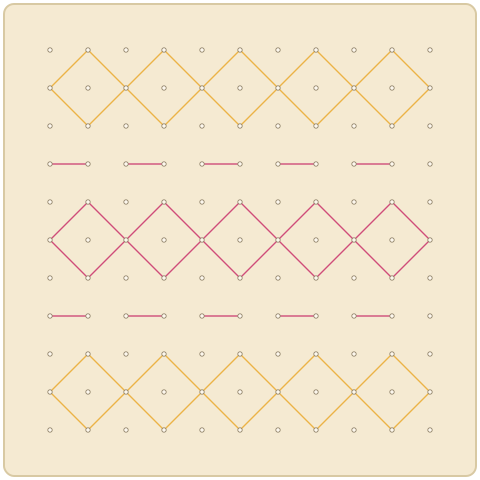
Kogin hem borders: chained small diamonds in three horizontal bands with running-stitch separator rows. 70 stitches.
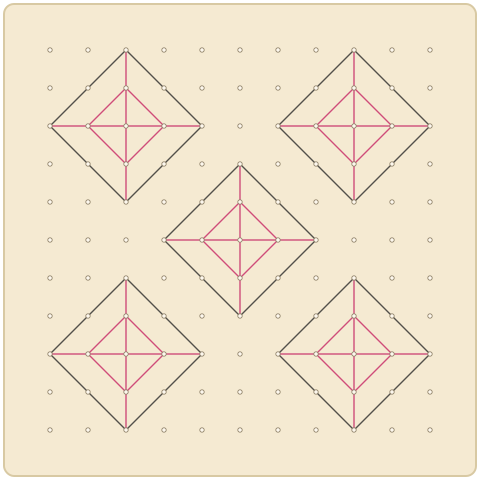
Hanabishi flower diamonds: five motifs, each a black outer diamond with magenta cross arms and an inner petal diamond. 80 stitches.
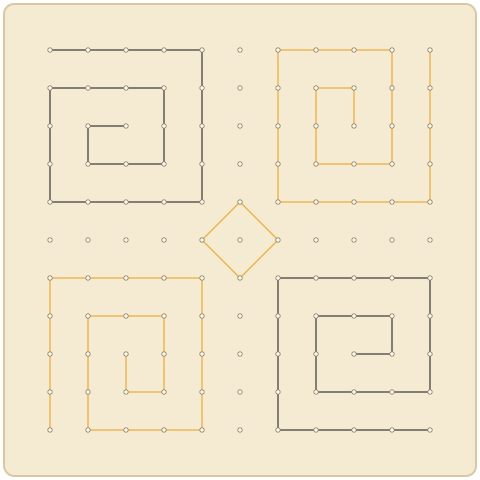
Raimon lightning spirals: four rectangular spirals rotated 90 degrees per quadrant, diagonal pairs in black and gold around a center diamond. 60 stitches.
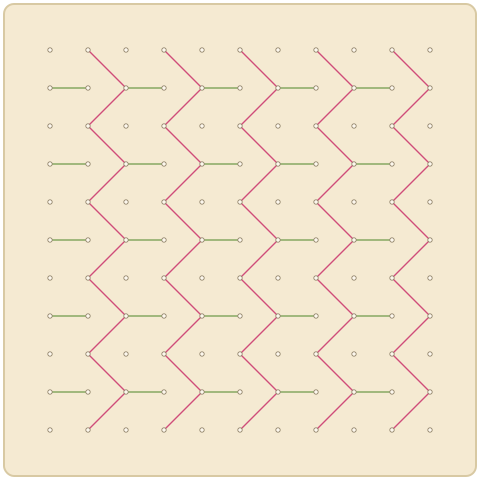
Kuguri-zashi threaded sashiko: a moss foundation of dash rows with magenta zigzag columns weaving through them. 75 stitches.
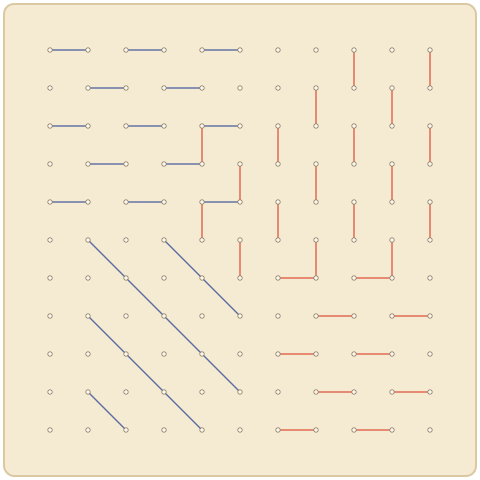
Boro mending field: five overlapping patches, each with its own running-stitch direction, color alternating indigo/vermilion per patch. 51 stitches.
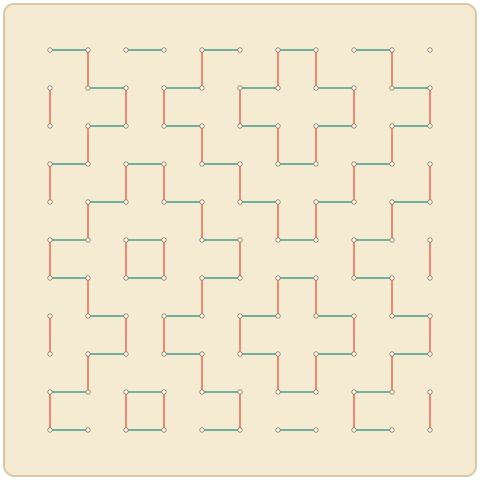
Hitomezashi maze driven by the Thue-Morse sequence; rows teal, columns vermilion. 110 stitches.
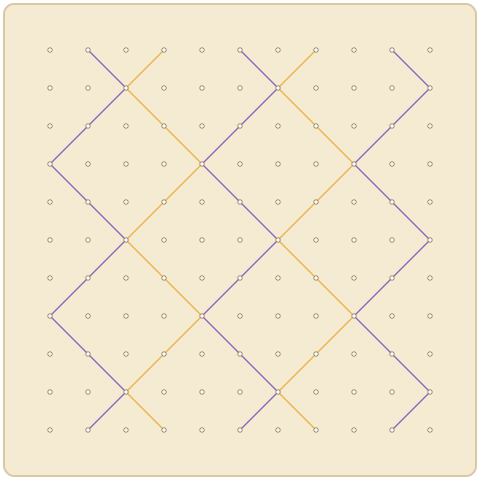
Tatewaku rising steam: five undulating vertical lines with alternating mirror phase, swelling apart and kissing at shared holes. 50 stitches, purple/gold.
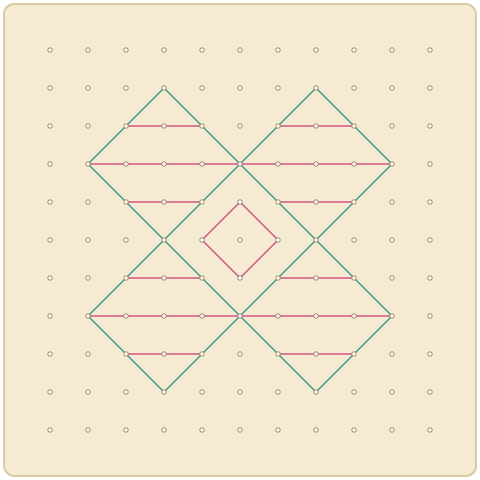
Nanbu hishizashi: four radius-2 diamond outlines in teal, each filled with counted horizontal rows in magenta. 52 stitches.
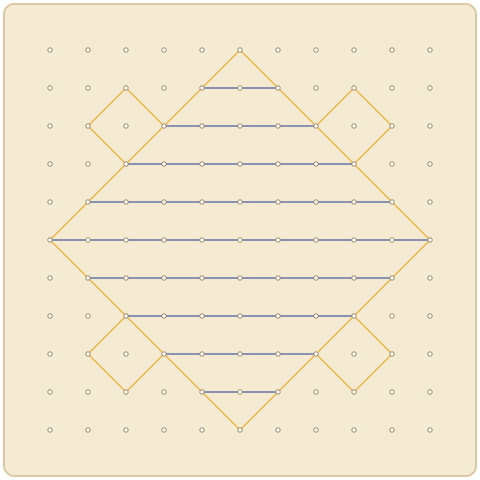
Kogin-zashi modoco: a solid counted diamond of stacked 2-cell horizontal dashes inside a gold outline diamond with four pendant corner diamonds. 57 stitches, indigo/gold.
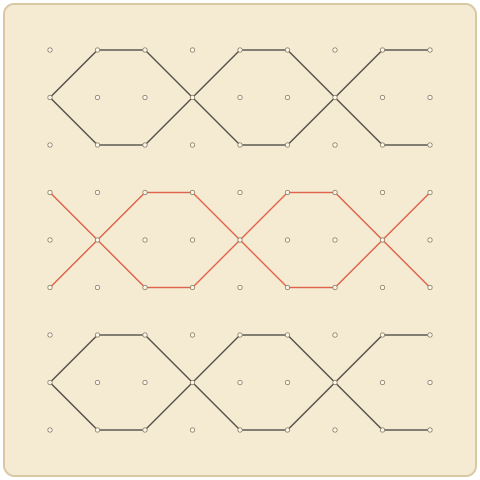
Kawari kikkozashi tortoiseshell: staggered bands of stitched hexagons clipped at the card edges, color by band parity. 48 stitches.
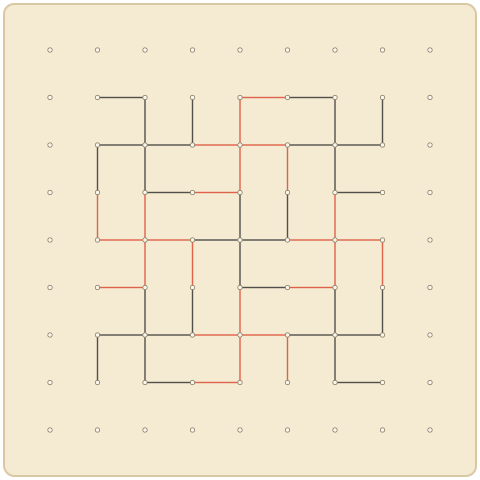
Sayagata key fret: nine manji pinwheels, rotation direction alternating checkerboard-wise and encoded as the color bit. 42 stitches.
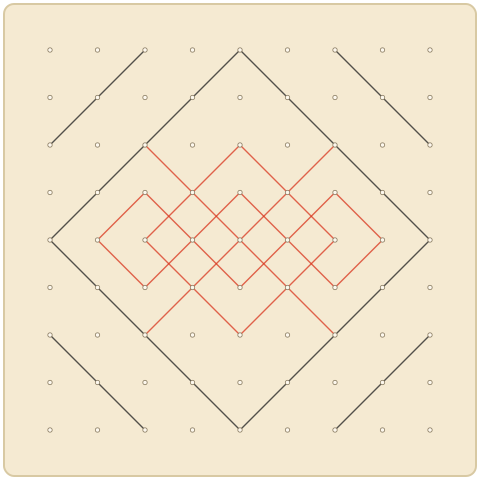
Matsukawabishi pine bark diamond: a radius-4 outer diamond with superimposed vertical and horizontal chains of smaller diamonds. 32 stitches.
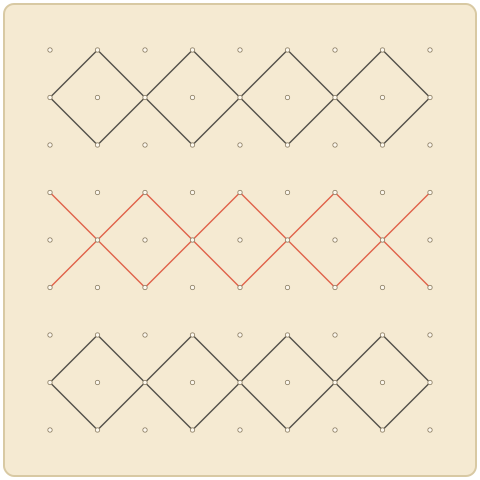
Amime fishing net: three diamond-mesh bands with the middle band half-dropped, color by band parity. 48 stitches.
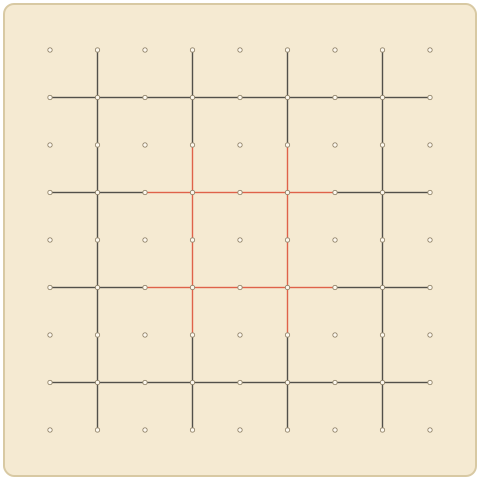
Igeta well curb: five interlocking hash motifs in quincunx layout, the vermilion center threaded first so it owns the shared arms. 32 stitches.
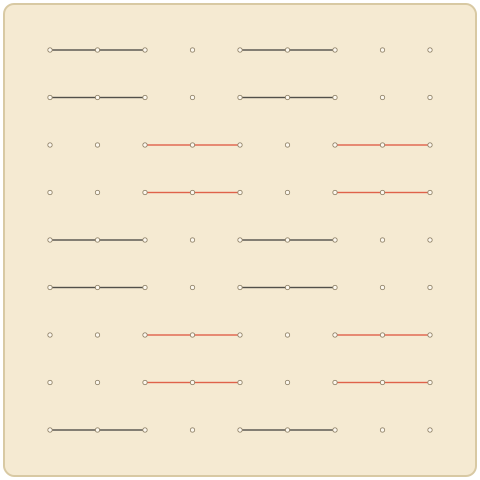
Kakinohanazashi persimmon flower: offset 2x2 blocks of horizontal dashes in checkerboard phases, color by phase. 36 stitches.
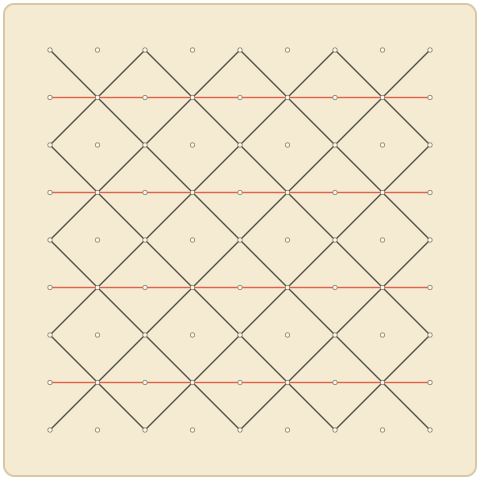
Kagome basket weave: a tri-axial mesh of vermilion horizontals and black unit-diagonal chains in both directions. 96 stitches.
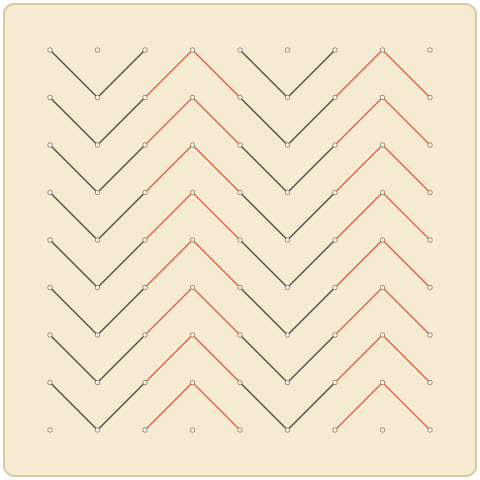
Yabane arrow feathers: four vertical fletching bands of chevrons, alternate bands pointing up and down, color by band. 64 stitches.
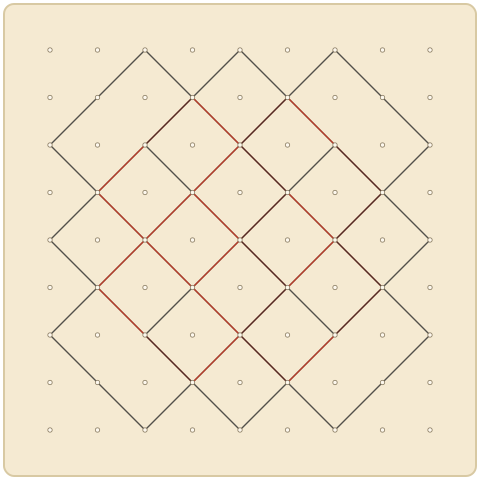
Shippo seven treasures: interlocking radius-2 diamond rings at 13 staggered centers, color by column parity. 42 stitches.
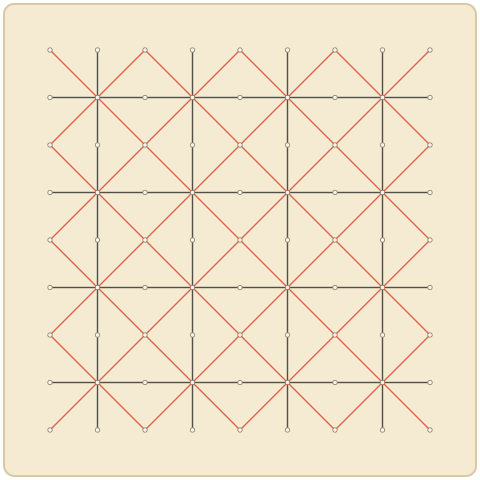
Asanoha hemp leaf: 16 eight-spoke star bursts on alternating grid points; axis spokes black, diagonal spokes vermilion. 128 stitches.
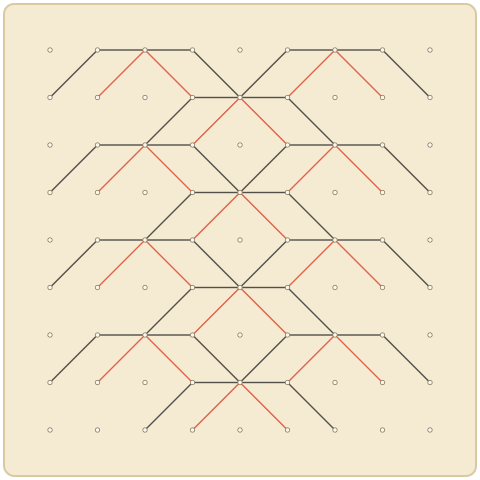
Seigaiha waves: staggered rows of wide humps with a nested vermilion inner cap. 60 stitches.
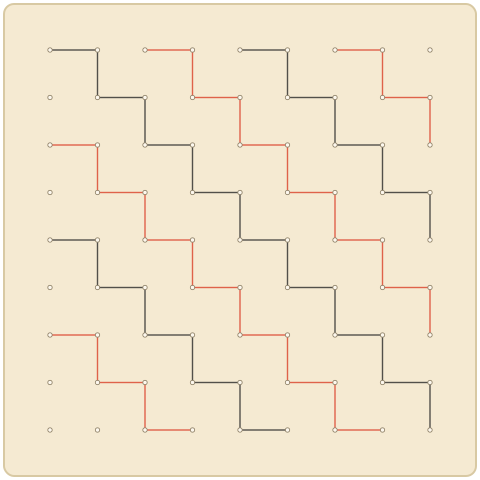
Dan-tsunagi linked steps: parallel staircases of alternating horizontal and vertical stitches, color alternating per staircase. 67 stitches.
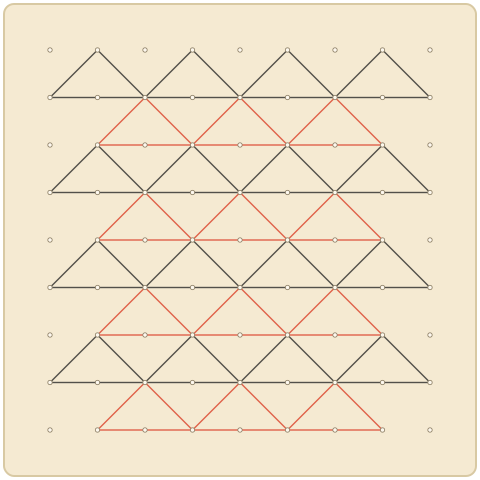
Uroko fish scales: 8 bands of triangles, odd bands offset half a base, color by band parity. 84 stitches.
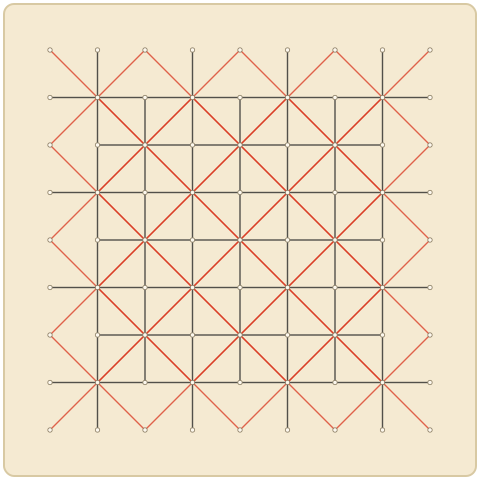
Komezashi rice stitch: 2-cell cross arms in black plus diagonal arms in vermilion at alternating interior points. 100 stitches.
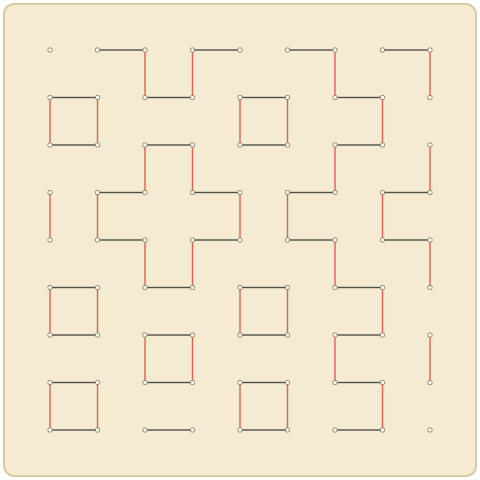
Hitomezashi phase maze with row and column phase bits from the word SASHIKO in 5-bit letters; rows black, columns vermilion. 72 stitches.
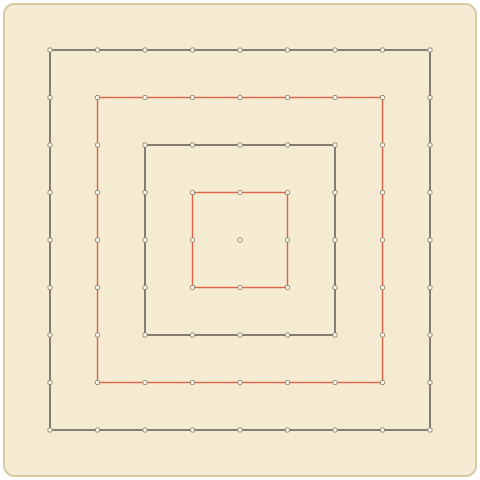
Masuzashi measuring boxes: four concentric square outlines in unit stitches, color alternating by ring. 80 stitches.
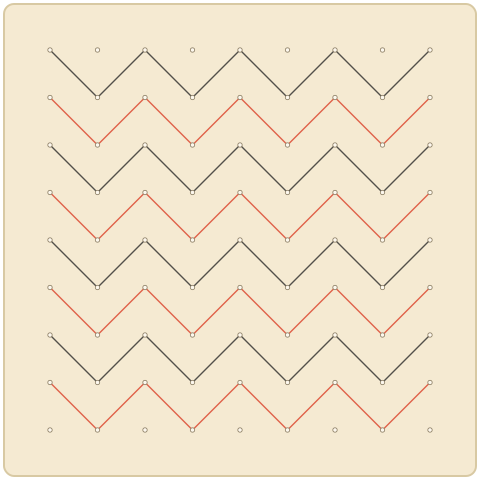
Yamagata mountains: eight chevron bands, each one cell tall as in stitched cloth, color alternating by band. 64 stitches.
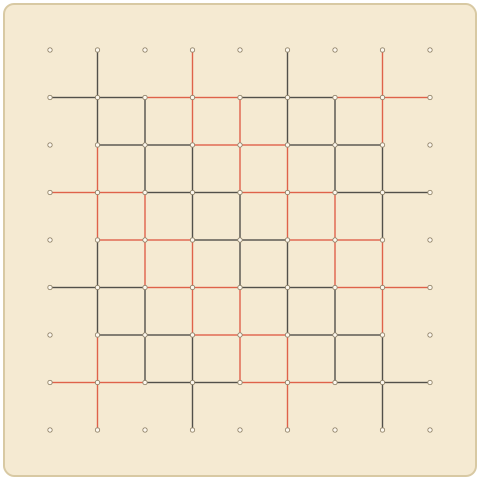
Jujizashi cross stitch: two-cell horizontal and vertical arms crossing at every other interior hole, color alternating along the diagonals. 50 stitches.
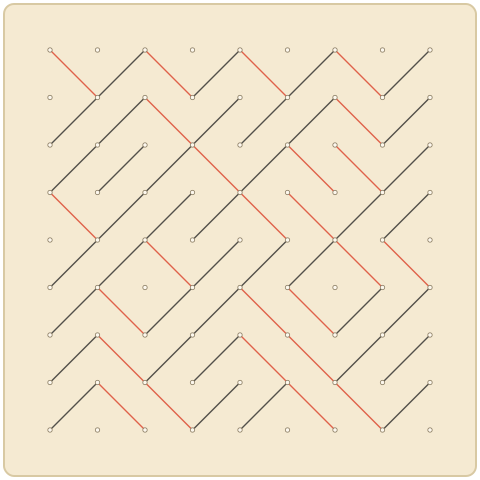
Diagonal one-stitch field: one diagonal per cell, direction chosen by 64 binary digits of pi, color by direction. 64 stitches.
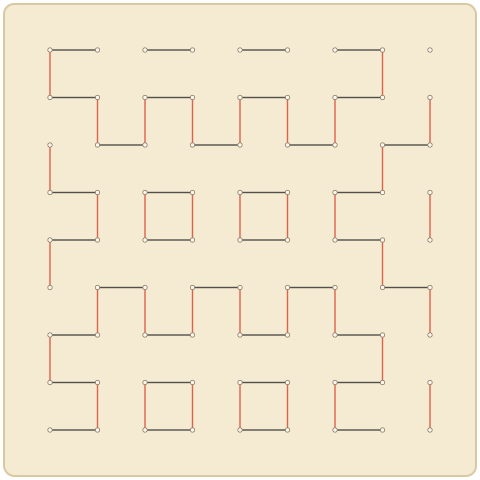
Hitomezashi maze on the 9 x 9 interior grid: each row and column gets alternating one-cell dashes with phase set by a binary digit of pi; the maze figures are emergent, not drawn. 72 stitches.
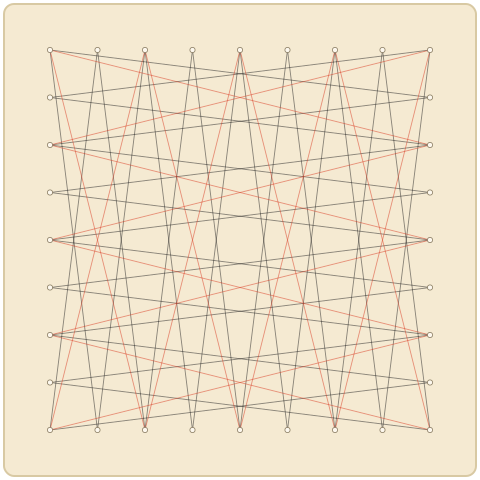
Yamagata: eight zigzag mountain chains alternating between opposite sides, short wavelengths black, long vermilion, crossing into hishi diamonds. 48 chords.
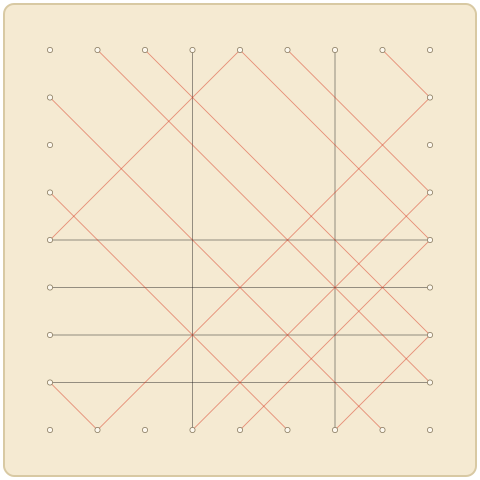
Hitomezashi: grid lines and diagonal rulings each kept or skipped by successive binary digits of pi - sparse by design, since the pattern is the presence/absence decision. 19 chords.
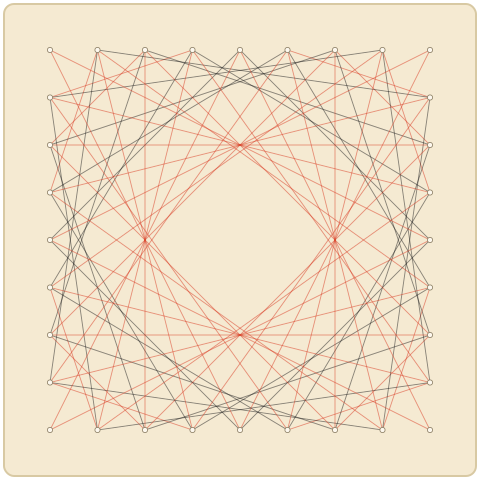
Shippo tsunagi: concentric treasure rings from constant-offset chord families at offsets 4, 8, and 12. 72 chords.
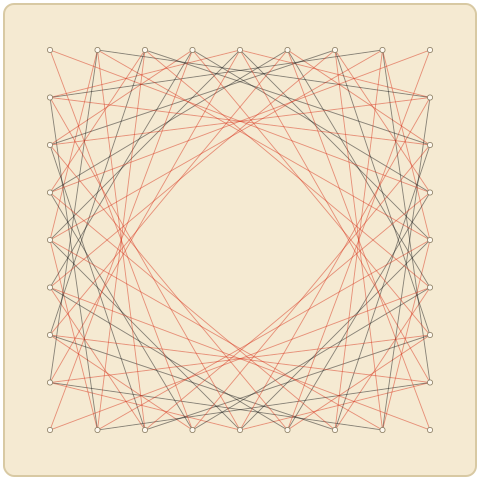
Seigaiha: overlapping wave arcs from corner parabola envelopes at three scales; color encodes scale parity. 76 chords.
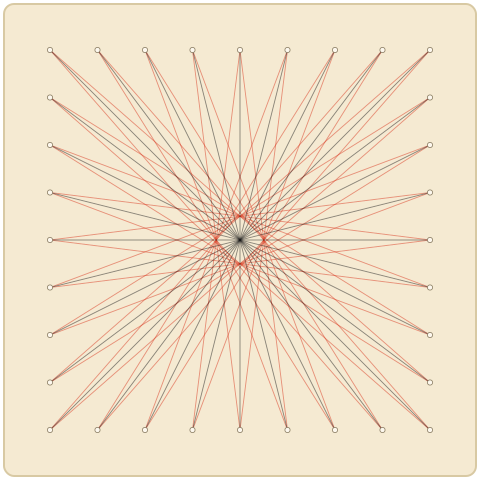
Asanoha: radial hemp-leaf burst - a vermilion near-diameter envelope forming the tight central star, with black diameter spokes laid on top. 48 chords.
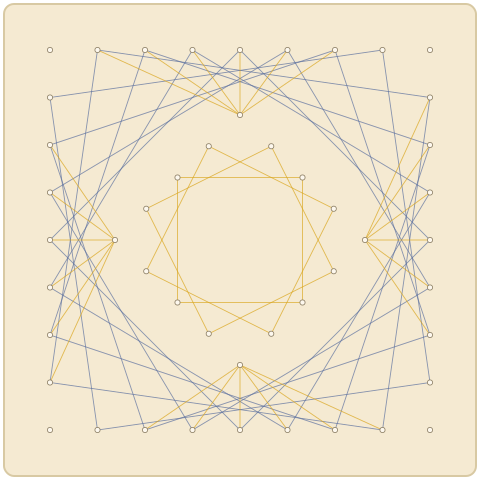
Diamond in square: slate-blue envelope arcs at every vertex with gold vertex fans and corner stitching.
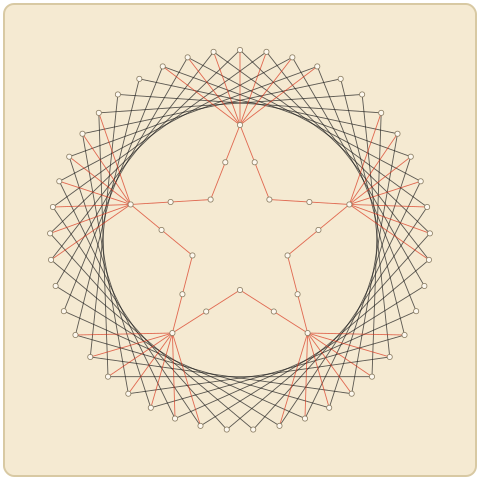
Star in ring: a black {45/11} ring tour tuned so its web clears the five-point star, with vermilion tip fans and the star outline.
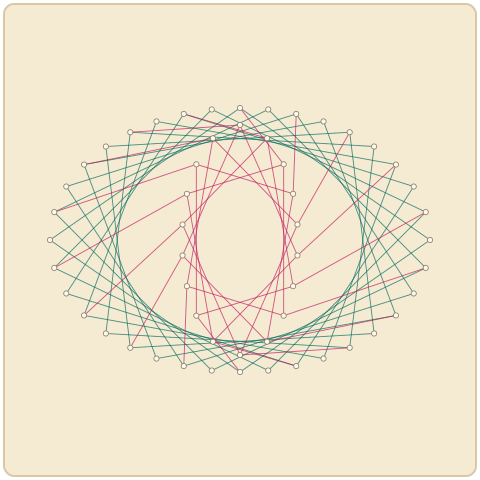
Crossed ellipses, horizontal outer and vertical inner: a teal offset envelope with magenta twisted spokes and an inner tour.
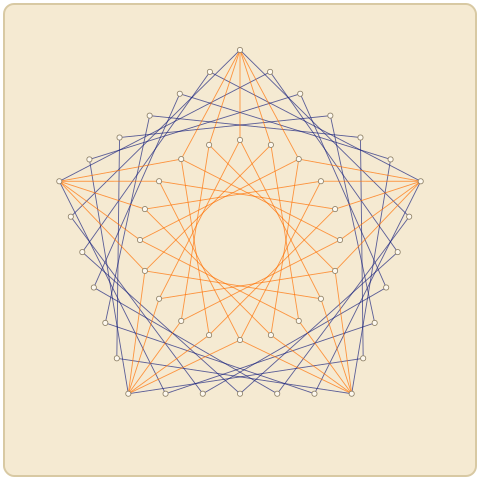
Pentagon wreath with inner rose: an indigo {30/7} offset tour with orange corner fans and an inner {20/7} tour.
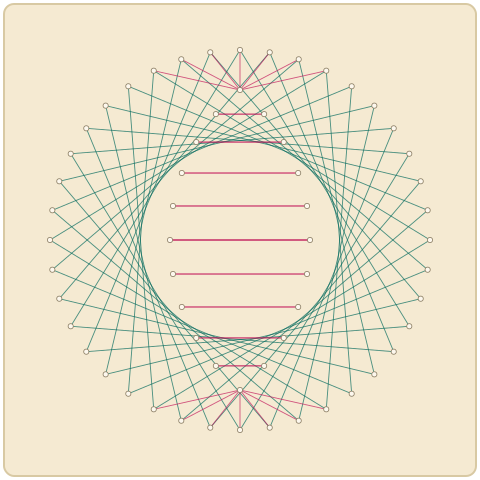
Circle and lens: a vesica held inside a star ring, a teal {40/13} star tour with magenta lens tip fans and rungs.
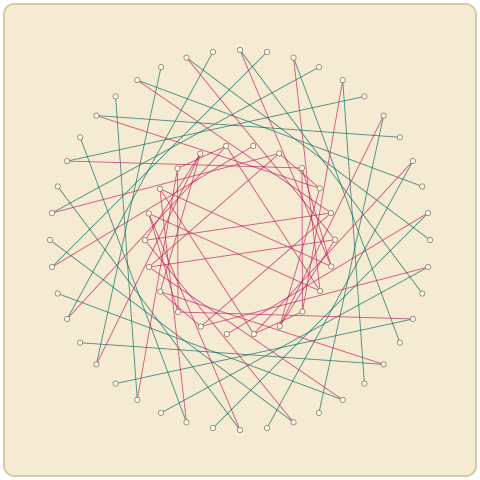
Annulus twist: outer circle 44 plus inner circle 22, a teal star polygon {44/13} with magenta twisted spokes and an inner nephroid.
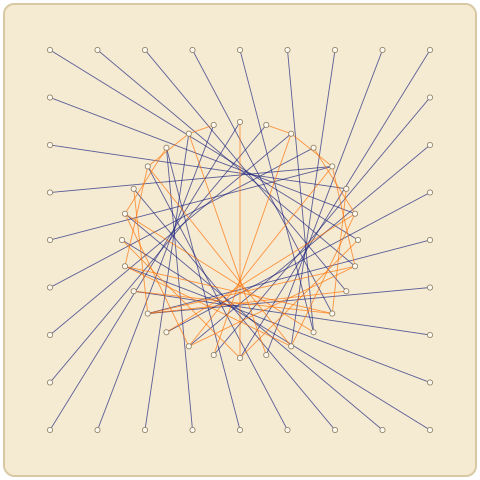
Circle in square: square 32 holes plus circle 28, an indigo twisted cross-curve envelope with an orange cardioid on the inner circle.
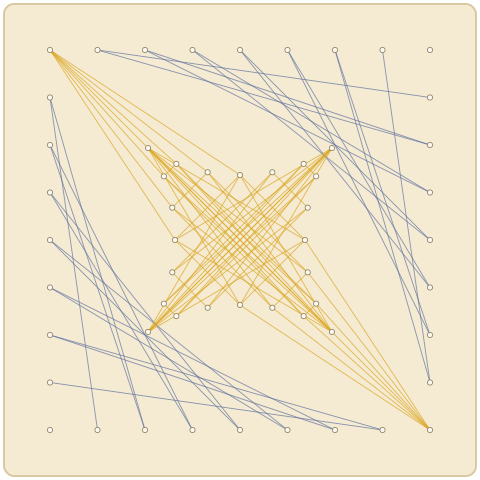
Lens and star, homage to a photographed board: square 32 holes plus astroid 24, blue corner envelopes forming the lens with gold notch stitching, tip fans and corner fans.
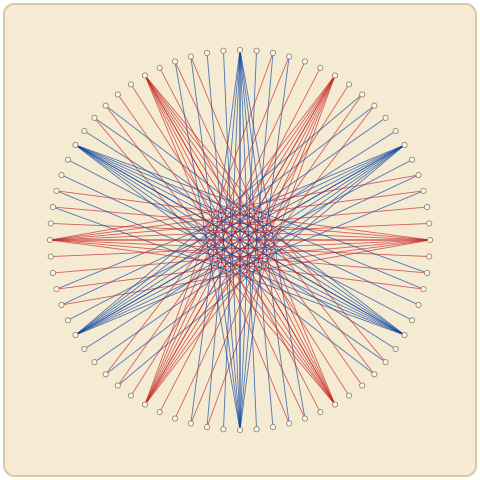
Twelve anchor fans of 8 chords each to the antipodal arc on 72 holes, colored by anchor parity.
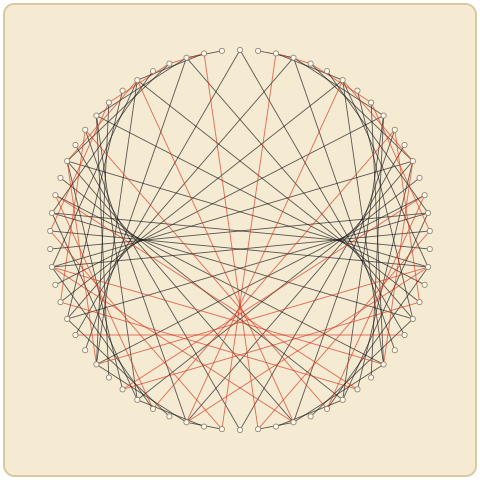
A nephroid k to 3k layered over a cardioid k to 2k on 66 holes.
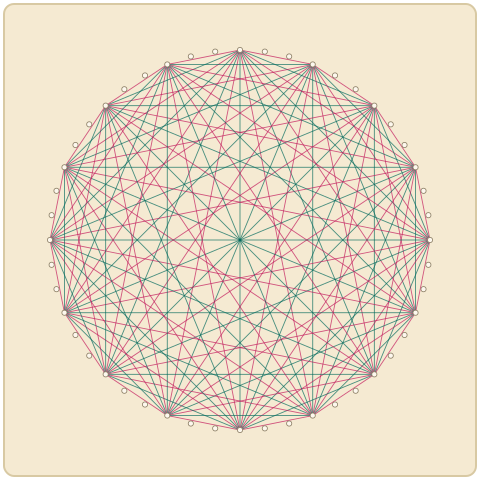
Complete graph K16 on every third hole of a 48-hole circle, colored by step-distance parity.
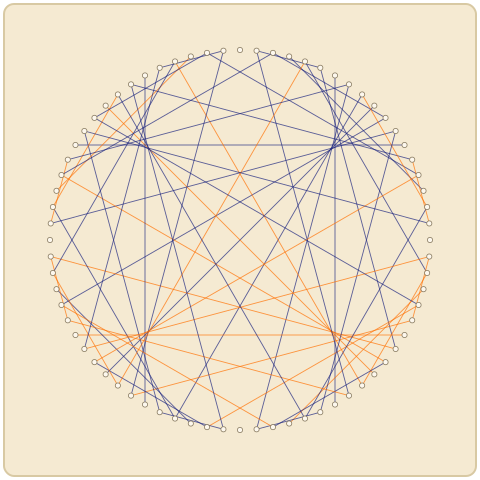
The 5x times table on 72 holes, k to 5k mod 72, colored by wrap parity.
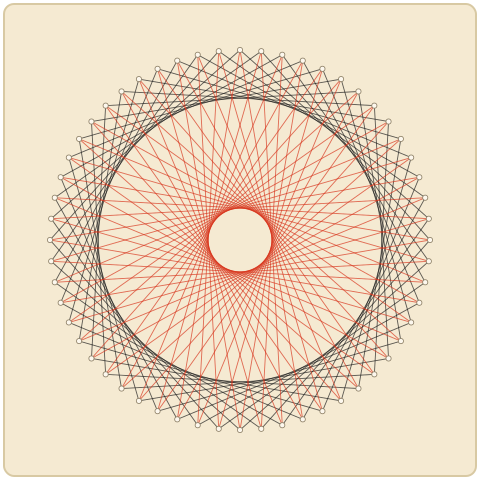
Two layered star tours on 56 holes, {56/13} in black under {56/25} in vermilion.
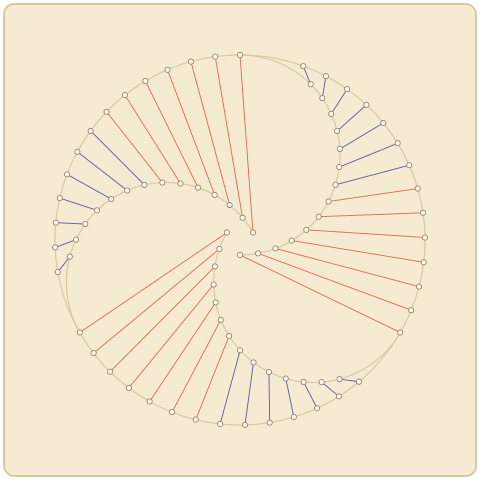
Arc swirl trefoil: three tapered blades with sharp rim tips at 12, 4 and 8 o clock, each strung between a rim arc and an inner arc, indigo at the tip and vermilion toward the center.
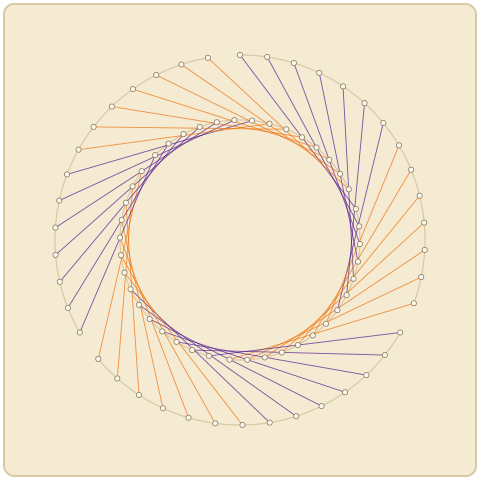
Arc swirl trio: three vanes 120 degrees apart wrapping into a near-continuous swirl ring, each fan changing color midway from purple to orange.
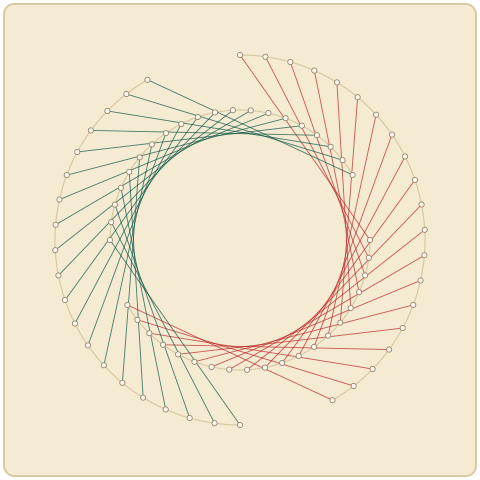
Arc swirl duet: two vanes rotated 180 degrees apart, each a ruled swirl strung between an outer and an inner arc rail, tangent to a central envelope circle; crimson and dark teal.
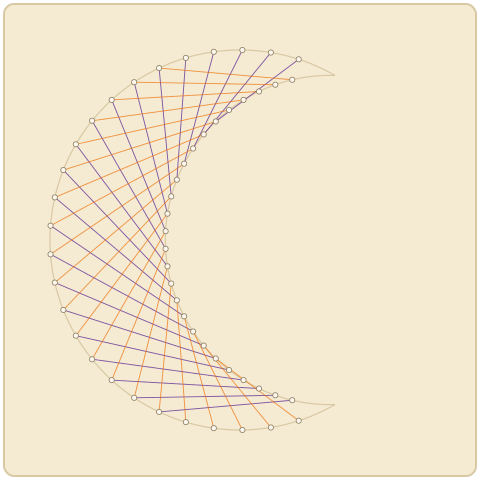
Crescent weave: a true lune opening to the right, two families shifted 5 holes in opposite directions braiding the moon, densest at its waist.
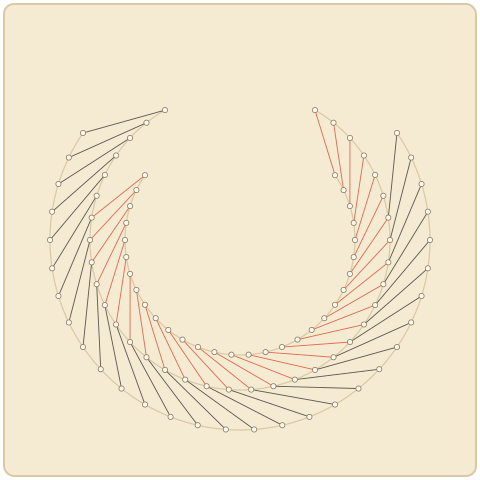
Feathered vortex wreath: three concentric arcs with the gap at 12 o clock, two same-handed spiral bands feathering the annulus into a vortex.
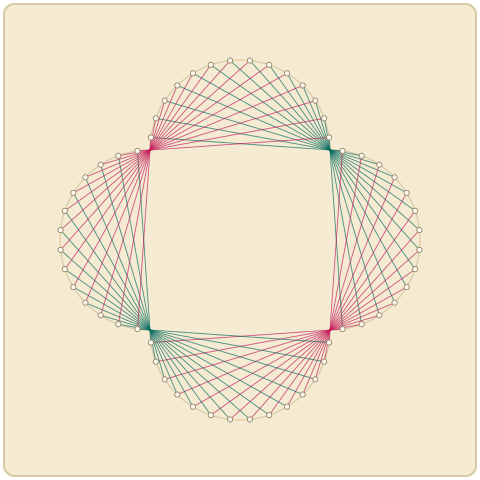
Quatrefoil: four semicircular petal arcs around a central square, each shared corner stitched into a parabola fan, weaving the petals and leaving a crisp square window in the middle.
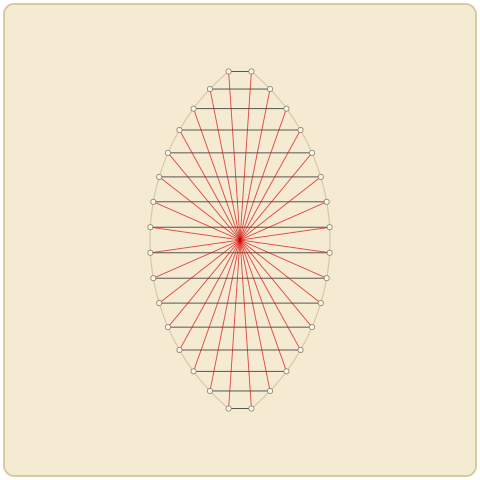
Vesica leaf: two circular arcs crossing like a leaf, black ribs joining straight across, then a red crossing family laid over them, densest at the waist.
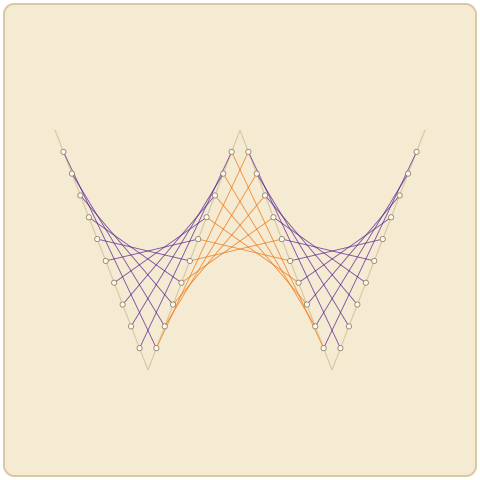
Wave cascade: a W of four line segments, the three interior corners stitched into parabolas alternating valley, peak, valley.
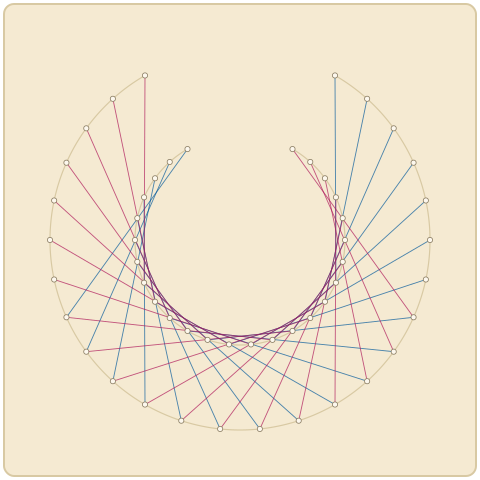
Open band: two concentric 300-degree arcs with the gap at 12 o clock, two counter-spirals shifted 7 holes weaving an annular braid.
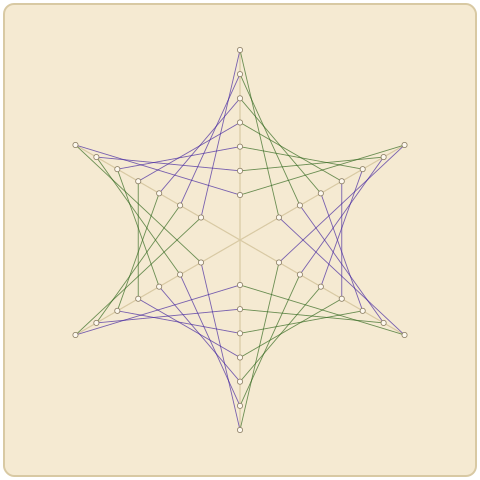
Asterisk rosette: three lines crossing at the center make six arms, each sector stitched into a parabola, six parabolas forming a snowflake rosette.
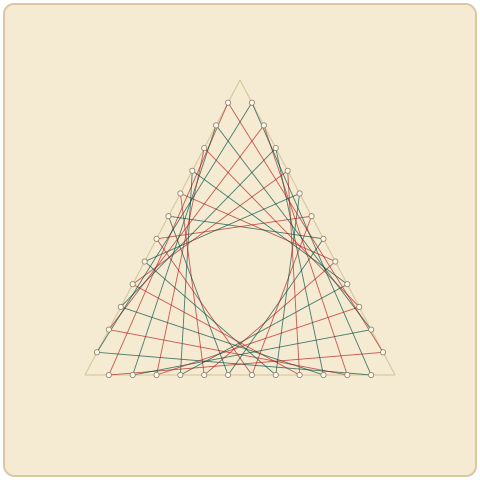
Triangle stitch: three lines forming a triangle, each corner stitched into a parabola, the three parabolas leaving a round window in the middle.
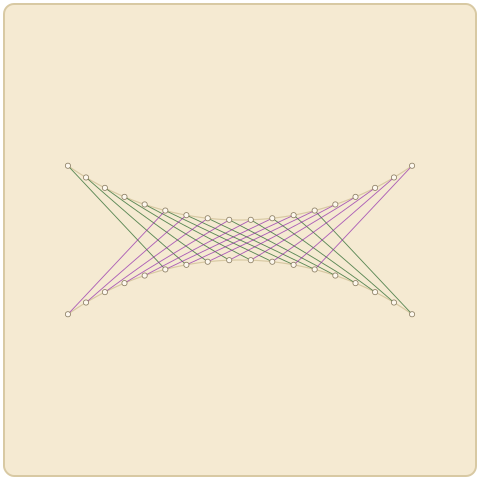
Eye weave: two shallow arcs facing each other, two families shifted 5 holes in opposite directions braiding the lens between them.
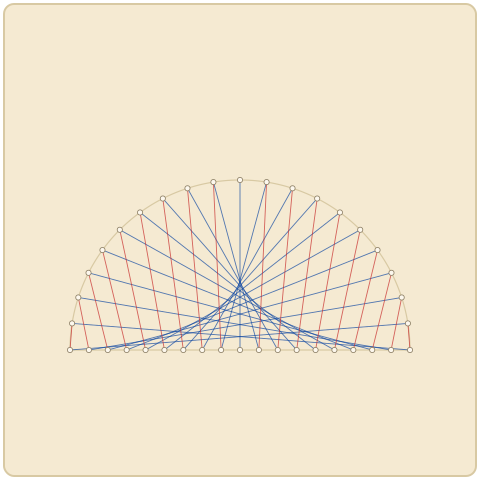
Sunburst: a semicircular arc over its own baseline, a blue crossing family sweeping through the center and a red curtain family hanging near-vertical.
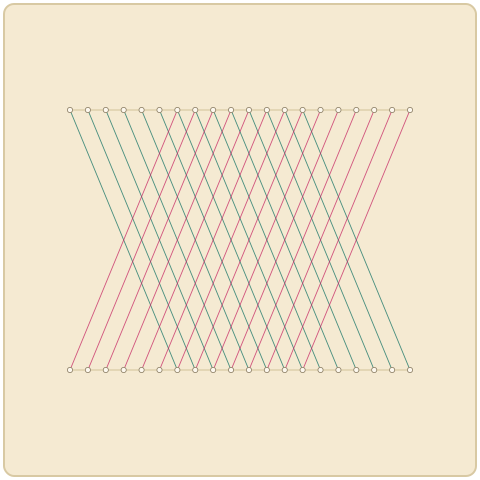
Harp weave: two parallel horizontal lines with two families of diagonals shifted 6 holes in opposite directions, crossing into a woven diamond lattice.
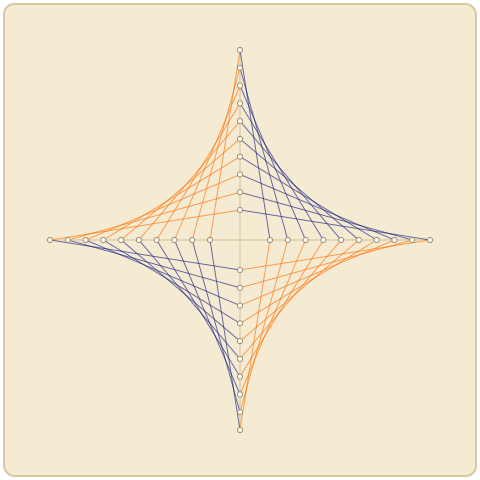
Cross aster: two perpendicular lines through the center make four arms, each quadrant stitched into a parabola, four parabolas meeting in a four-pointed star.
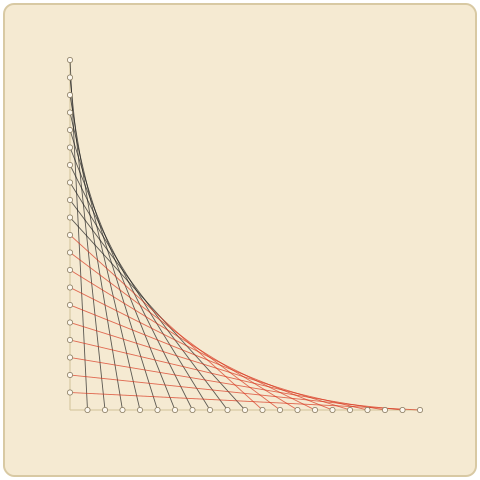
Corner parabola: the classic curve stitch on two perpendicular lines, chord k joining Ak to Bk so the chords envelope a parabola tangent to both arms.
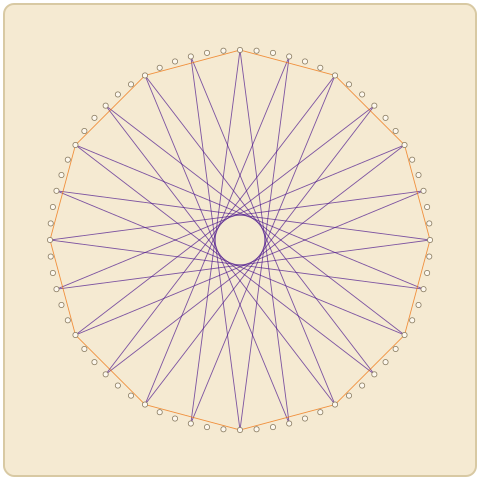
Whirl and rim on 72: a {24/11} star threaded on every third hole in violet, with a dodecagon rim on top in orange.
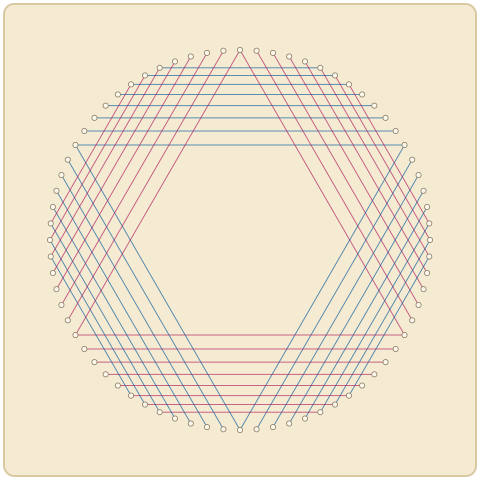
Hex ladder weave on 72: six ladders of 8 parallel chords, blue and pink alternating, the rotated bundles weaving a hexagonal lattice.
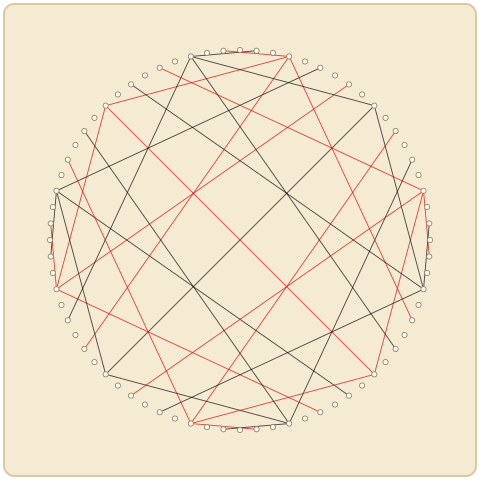
Astroid on the odd holes of 72: hole k to (72 - 3k) mod 72, black and red alternating around the rim, the chords enveloping a four-cusp astroid.
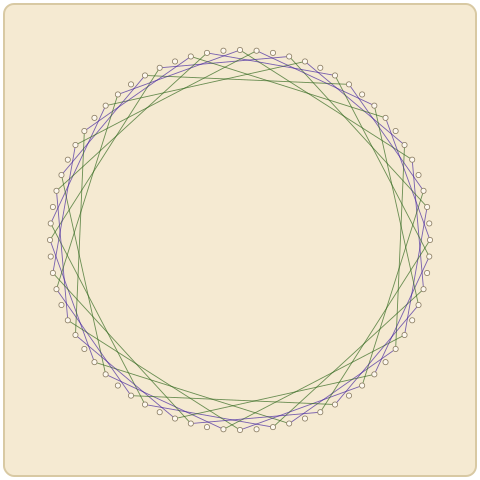
Gear-tooth wreath on 72: one closed walk alternating a long step +13 in olive and a short step +8 in violet, returning home after exactly 48 chords with an open center.
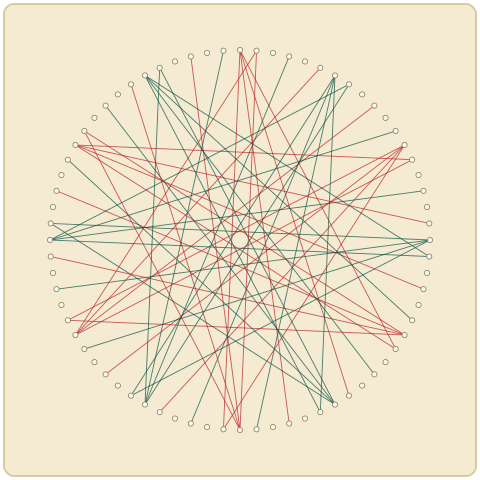
Pinwheel whirl on 72: 12 anchors each send four one-sided chords, crimson and dark teal by parity; all chords lean the same way, so the piece spins.
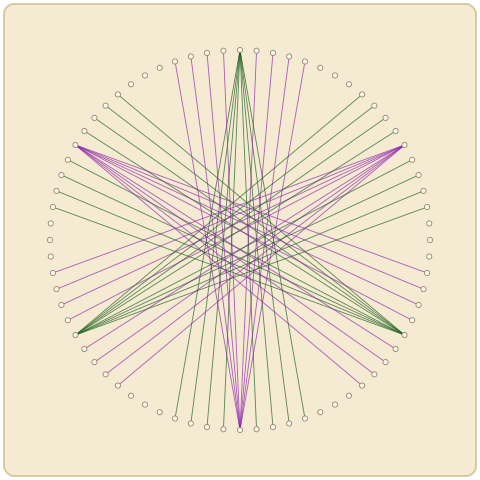
Six petal fans on 72: anchors at every 12th hole fan 8 chords to the arc around their antipode, green and purple alternating per anchor.
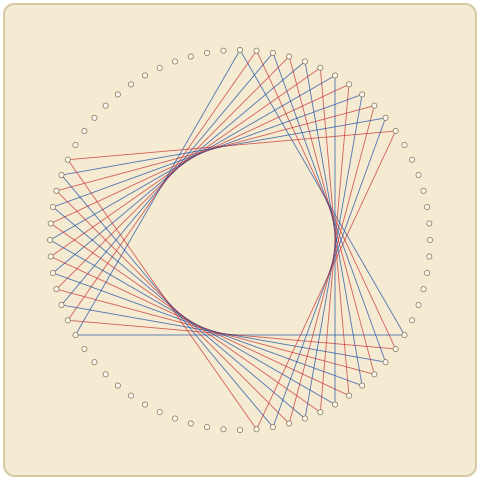
Twelve rotating triangles on 72: triangle t joins holes t, t+24, t+48, even t blue and odd t red, rotating through a 60-degree sweep into a two-tone wreath.
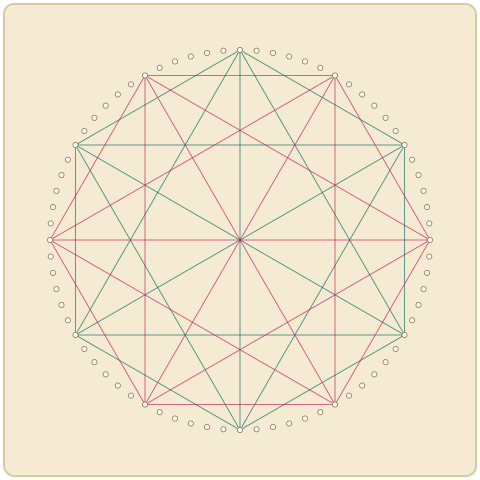
Two mystic hexagons on 72: a complete graph on six holes in teal, then the same rose rotated half a step in magenta on top, a Star-of-David weave with 12-fold color symmetry.
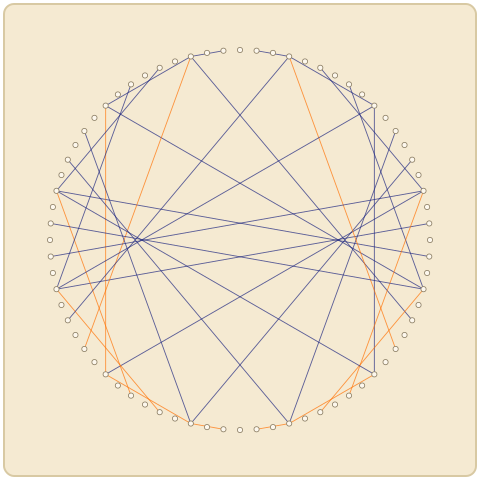
Sparse nephroid on 72: the 3x table on odd holes, indigo and orange by wrap parity.
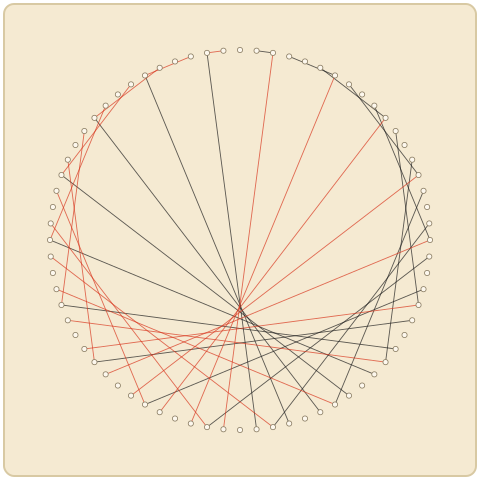
Half-density cardioid on 72 holes: hole k to 2k mod 72 for odd k only, black before the product wraps and vermilion after; the cardioid envelope survives at half density.
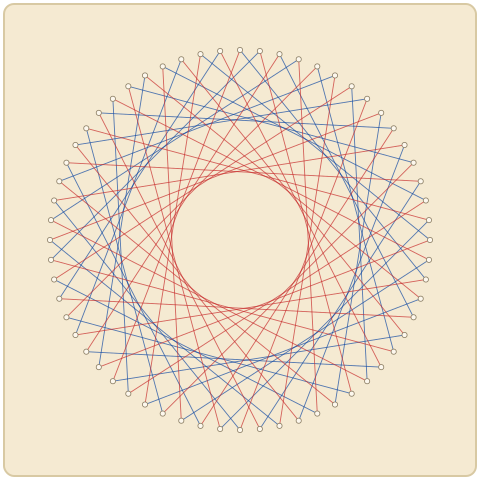
Interleaved parity stars on 60: even holes step ahead by 17 in blue, odd holes by 23 in red, two half-density stars of different pitch braided into a crown.
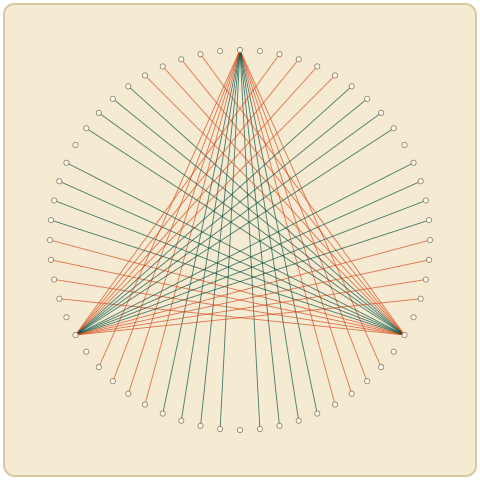
Trefoil giant fans on 60: three anchors each fan 16 chords to the opposite arc, dark teal inside and vermilion outside, three overlapping fans drawing a large layered triangle.
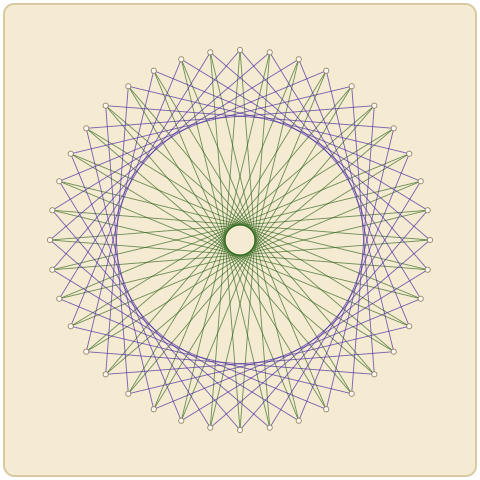
Double star whirl on 40: star polygon {40/19} in olive underneath forming the tight inner whirl, {40/11} in violet on top as the spiky outer ring.
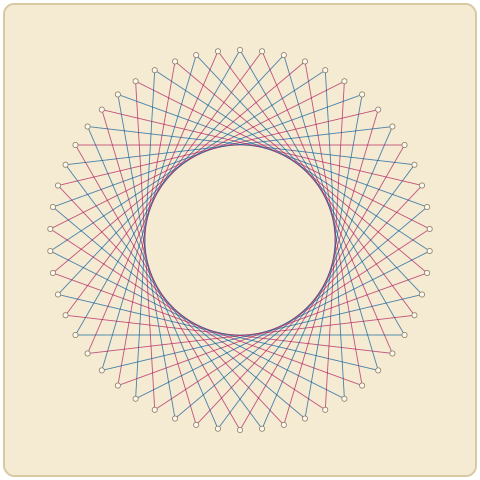
Eighteen interlocking triangles on 54: triangle t joins holes t, t+18, t+36, blue and pink by parity, a slowly rotating triangle filling a broad two-tone wreath.
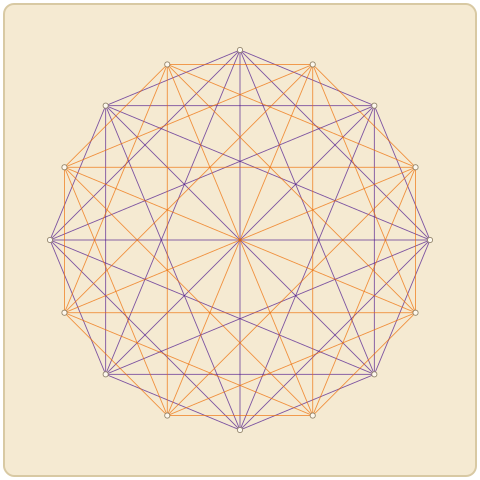
Double mystic rose on 16: two interleaved complete graphs, evens in violet and odds in orange, two K8 roses rotated half a step against each other.
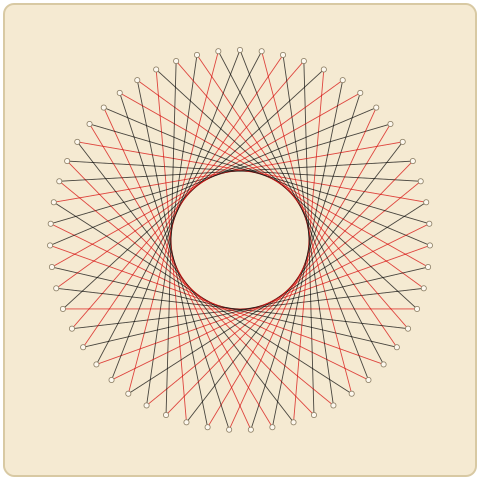
Fibonacci braided star on 55: a single closed tour stepping +21 mod 55, a golden-angle approximation, chords alternating black and red into a dense whirl rosette with a crisp circular void.
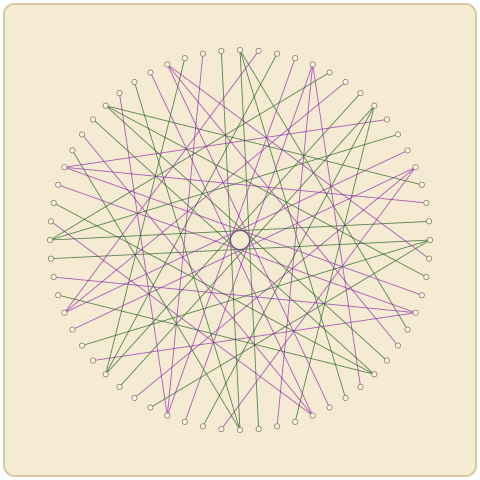
Pinwheel whirl on 64: 16 anchors each send three one-sided chords, green and purple by anchor parity; all chords lean the same way, so the piece spins rather than mirrors.
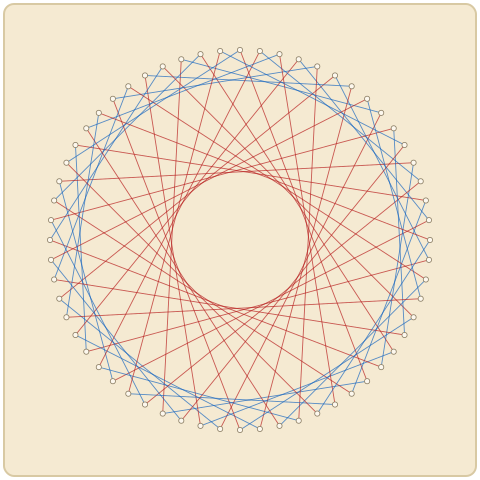
Cogwheel zigzag on 60: one closed walk alternating a long step +23 in crimson and a short step +11 in blue, a gear-toothed wreath with an open center.
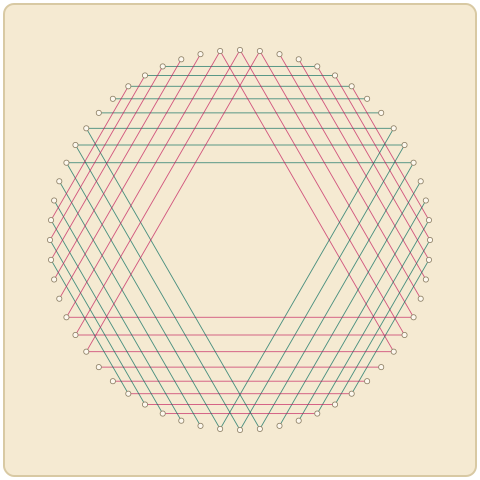
Hex weave on 60: six ladders of 8 parallel chords, teal and magenta alternating, the six rotated bundles weaving a hexagon-and-triangle lattice.
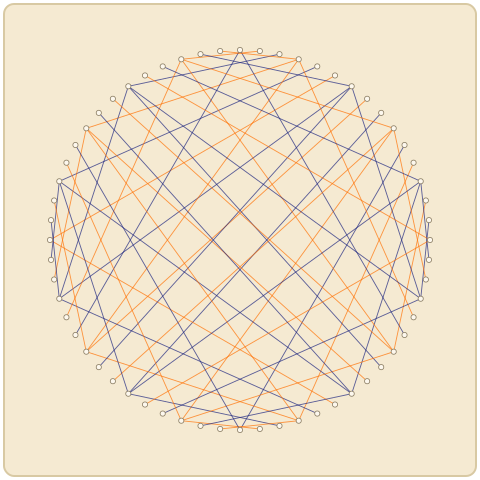
Astroid envelope on 60: every hole k except three sends one chord to (60 - 3k) mod 60, even k indigo and odd k orange, the chords enveloping a four-cusp astroid inside a woven globe.
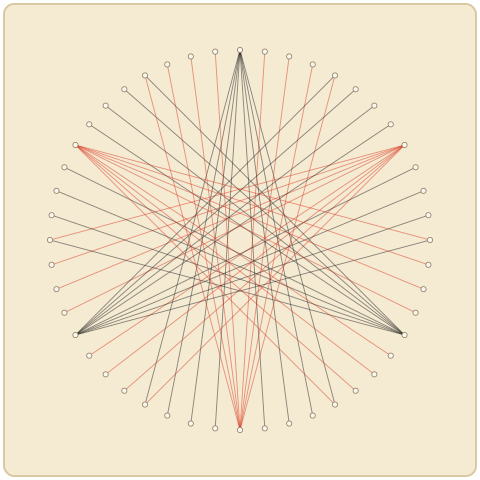
Six petal fans on 48 holes: anchors at holes 0, 8, 16, 24, 32, 40 each fan to the 8 holes around their antipode, petals alternating black and vermilion by anchor parity.
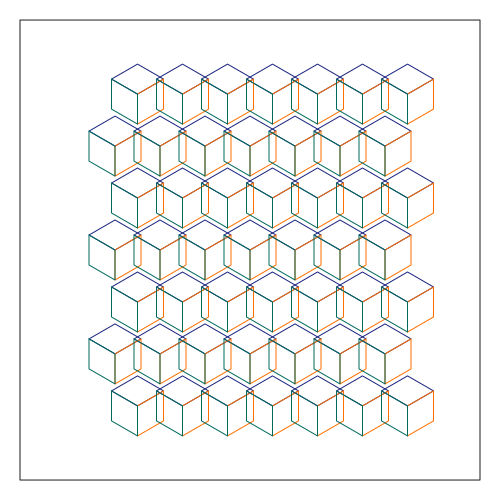
Tumbling blocks: an isometric cube field split by rhombus orientation class, one orientation per pen.
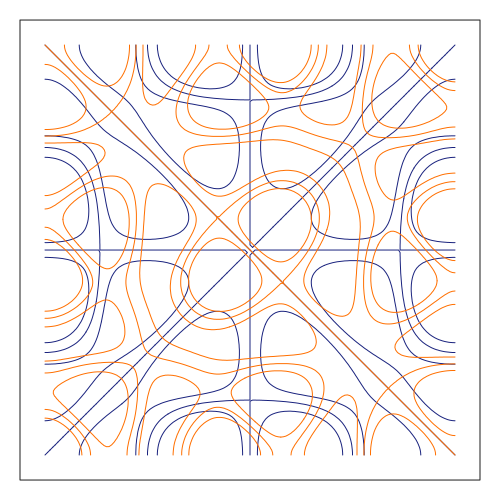
Chladni contours: nodal-line contours of two plate modes, mode (3,5) in indigo and mode (2,7) in orange.
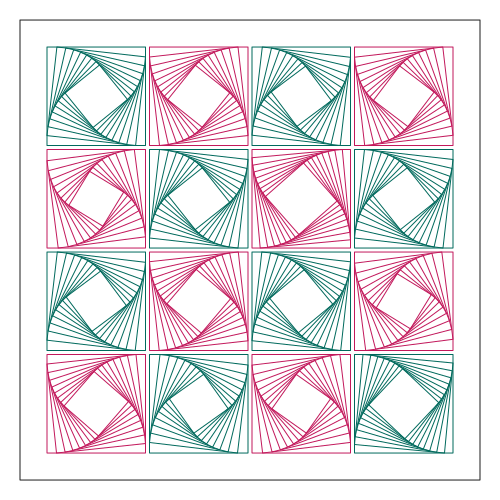
Whirl grid: 4 x 4 rotating-square cells with a checkerboard color split and opposite rotation directions, plotted as one pen pass per color.
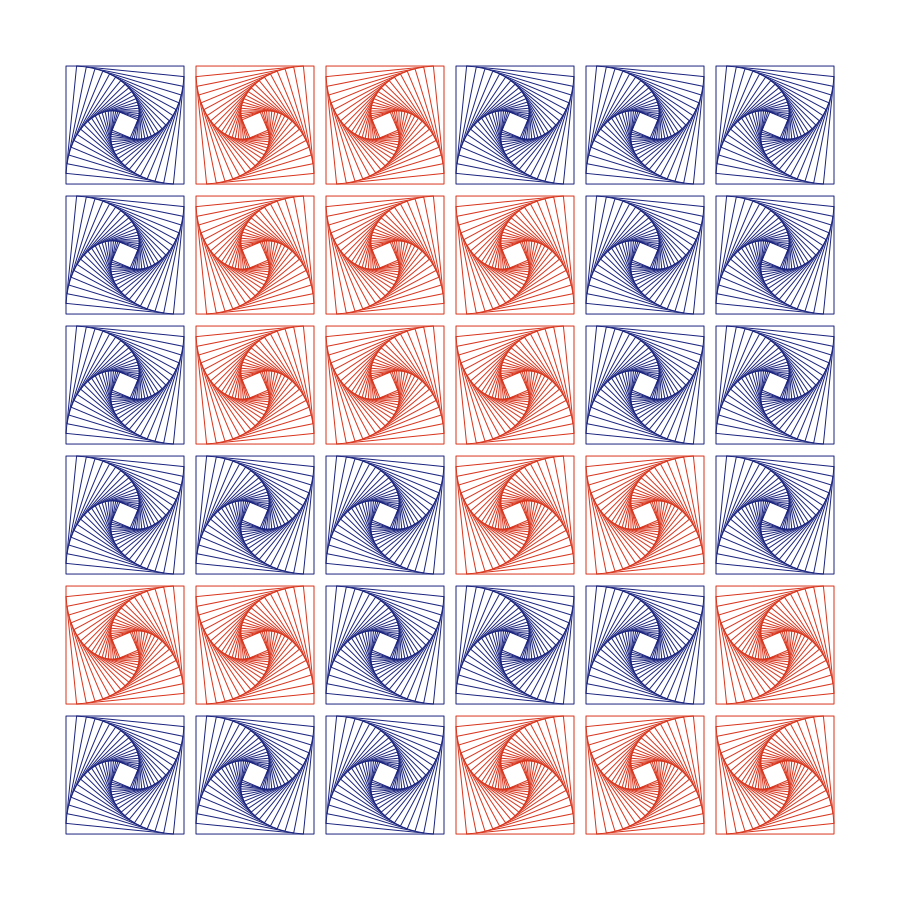
Pursuit-curve squares (the mice problem) in a 6 x 6 grid, colored by rotation direction.
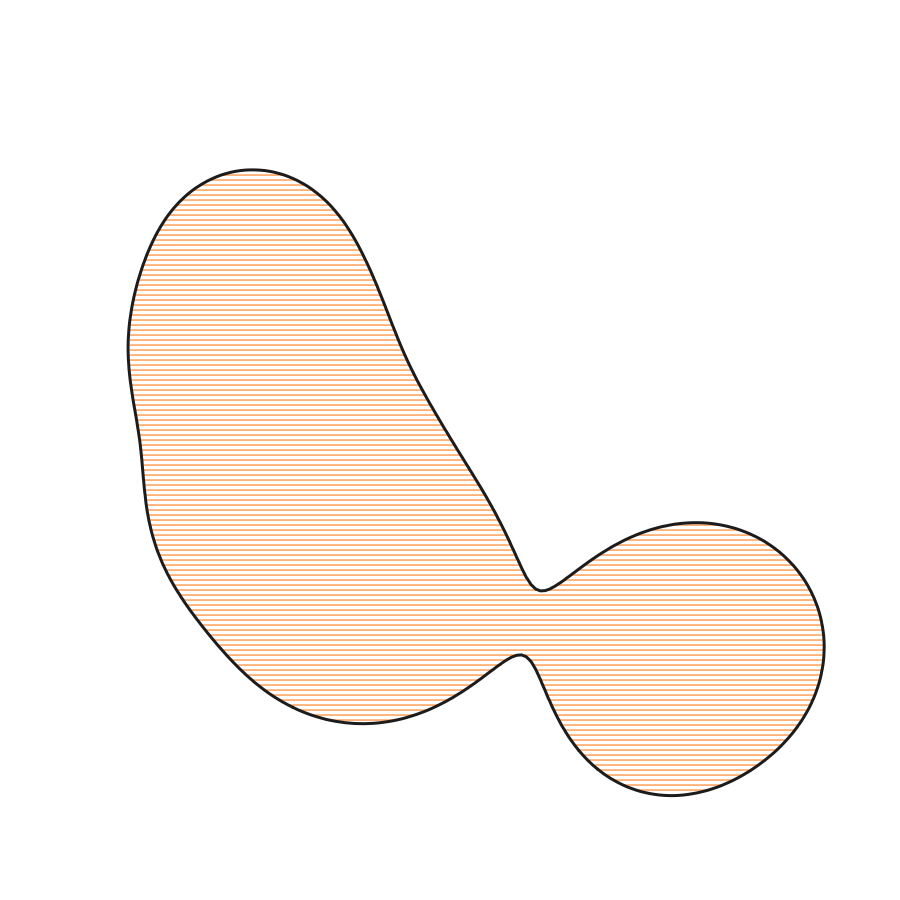
Metaballs with scanline hatching inside a marching-squares outline.
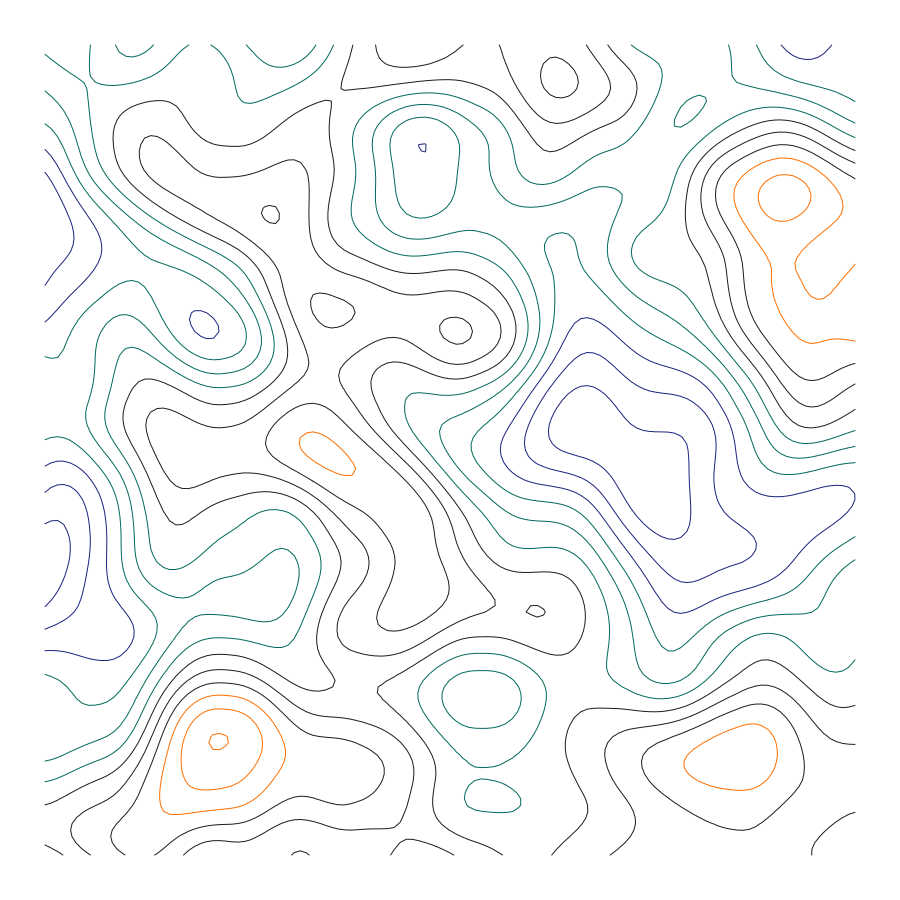
Topographic contour map of layered Perlin terrain via marching squares, 12 levels banded in four colors.
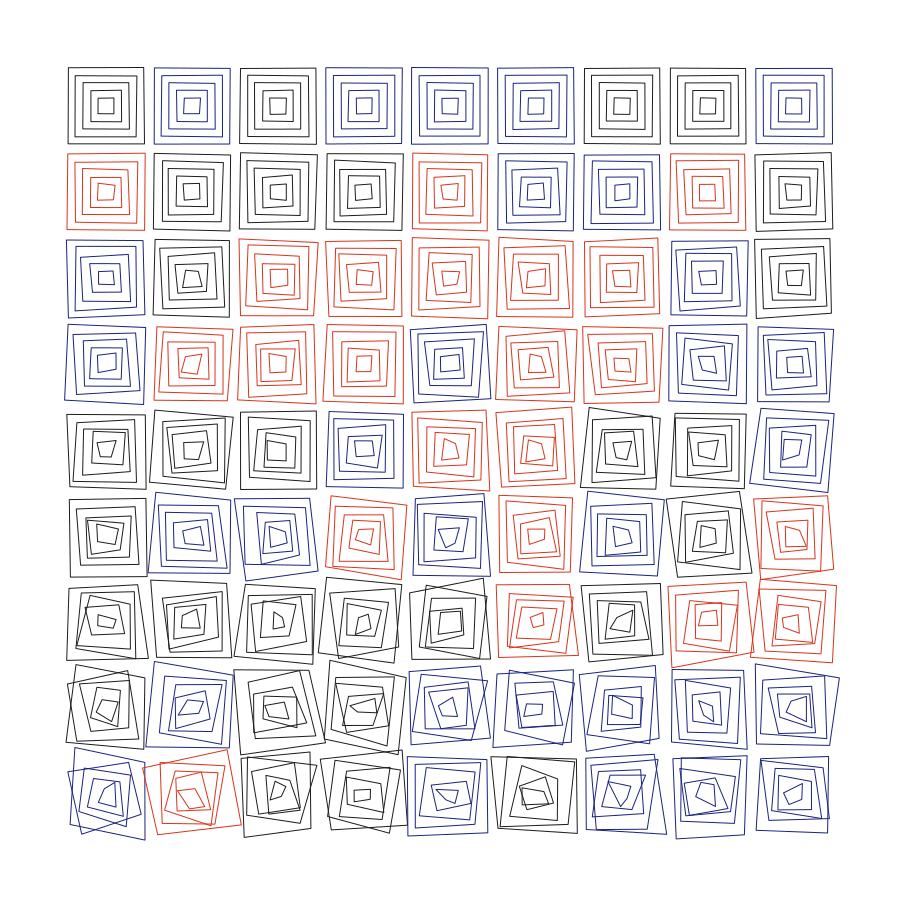
Molnar-style grid of jittered nested squares, disorder growing downward.
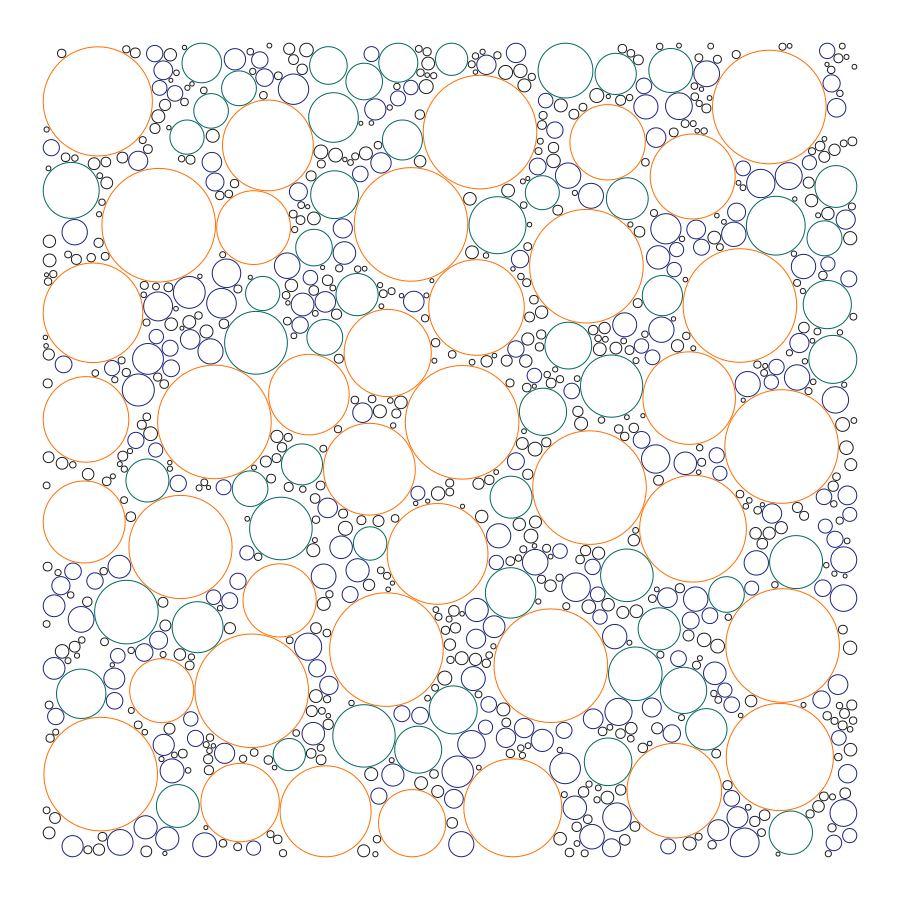
Greedy circle packing with stroked circles colored by size class.
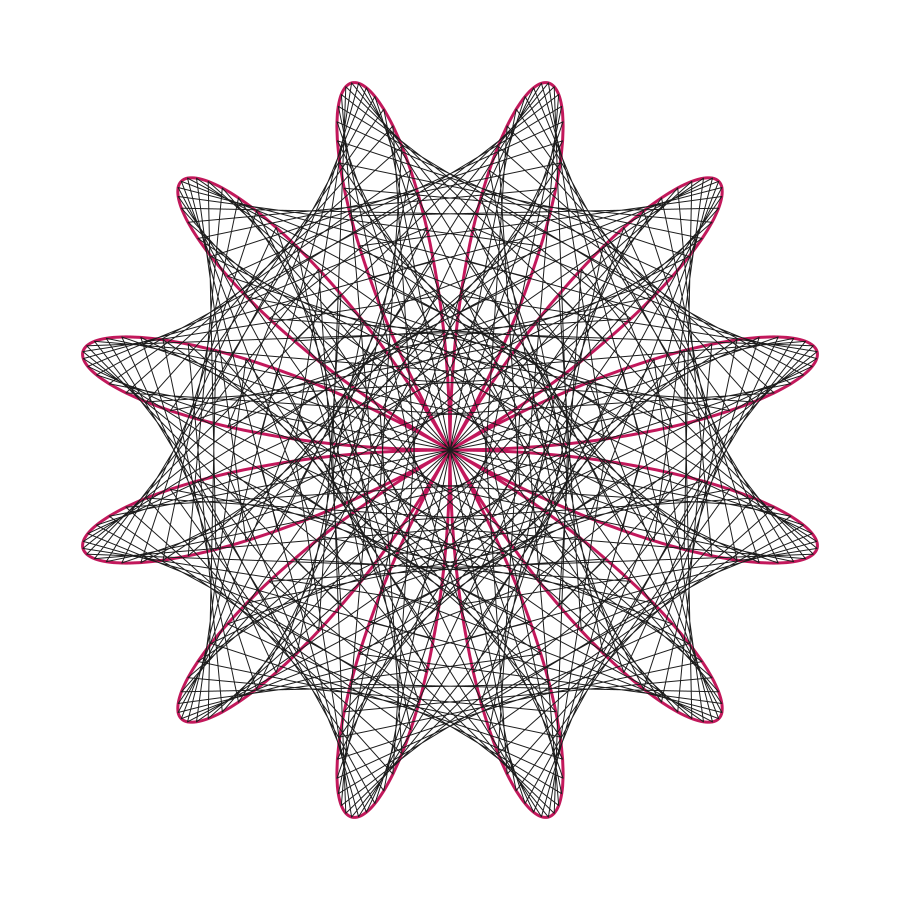
Maurer rose with n=6, d=71: a straight-line walk over the smooth rose curve.
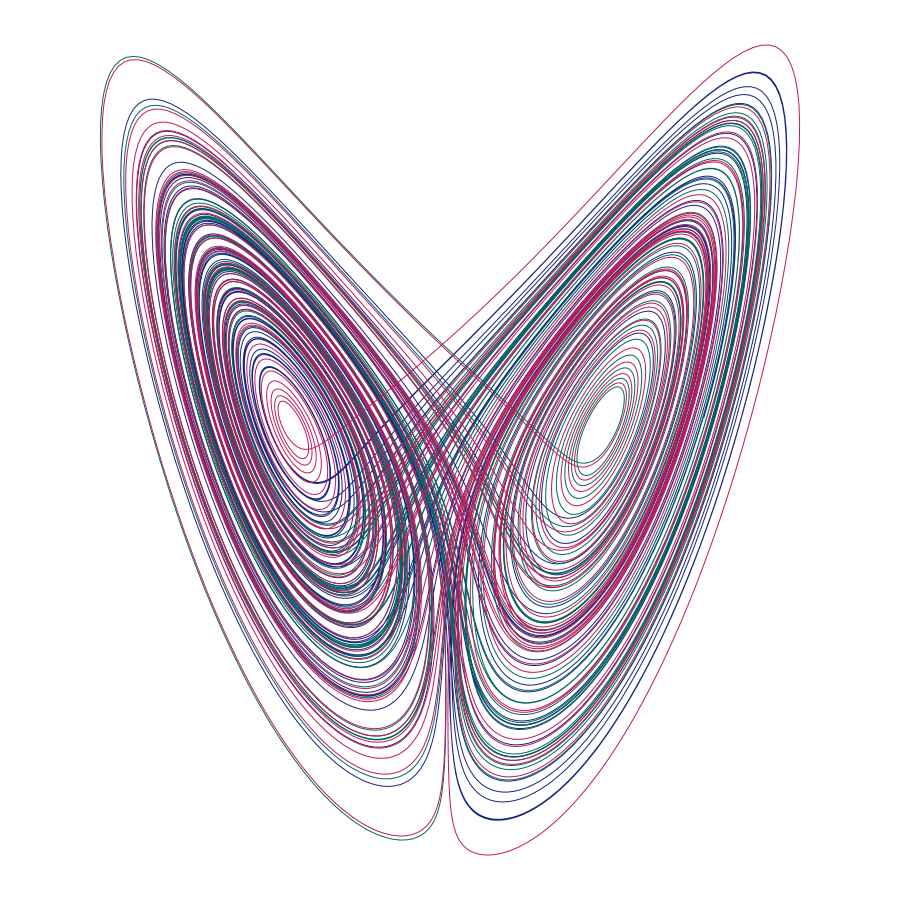
Lorenz attractor x-z projection: one continuous 40000-step line in three color runs.
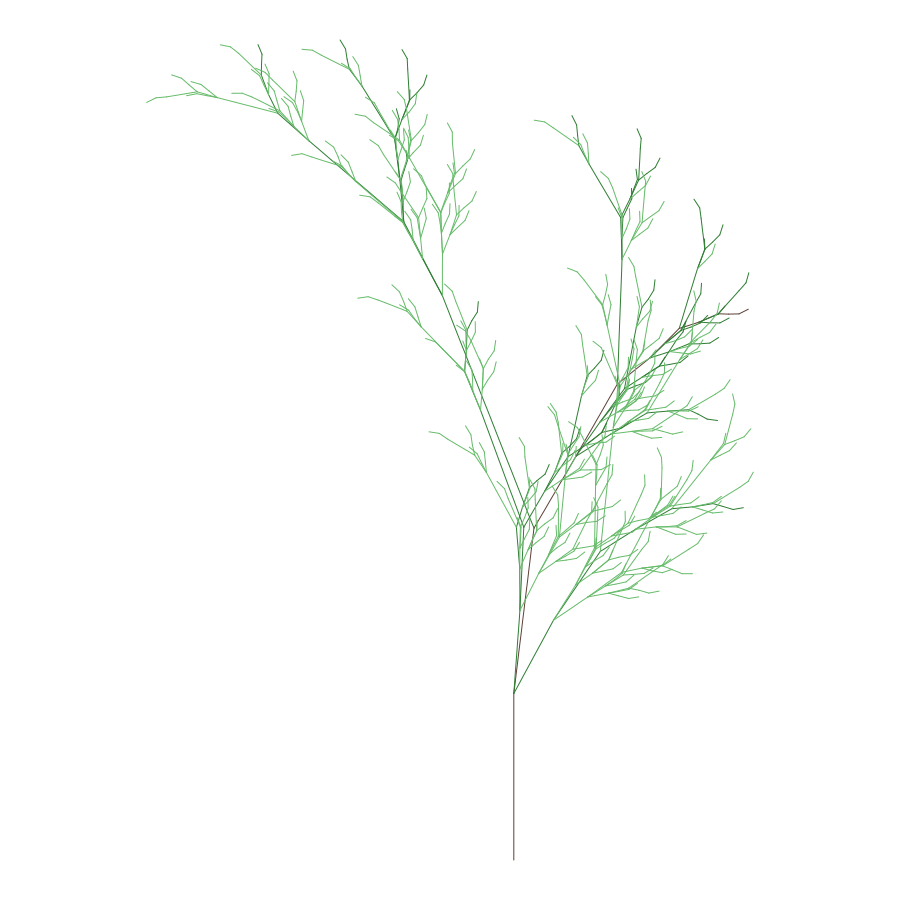
Bracketed L-system plant grown for 5 iterations, colored by branch depth.
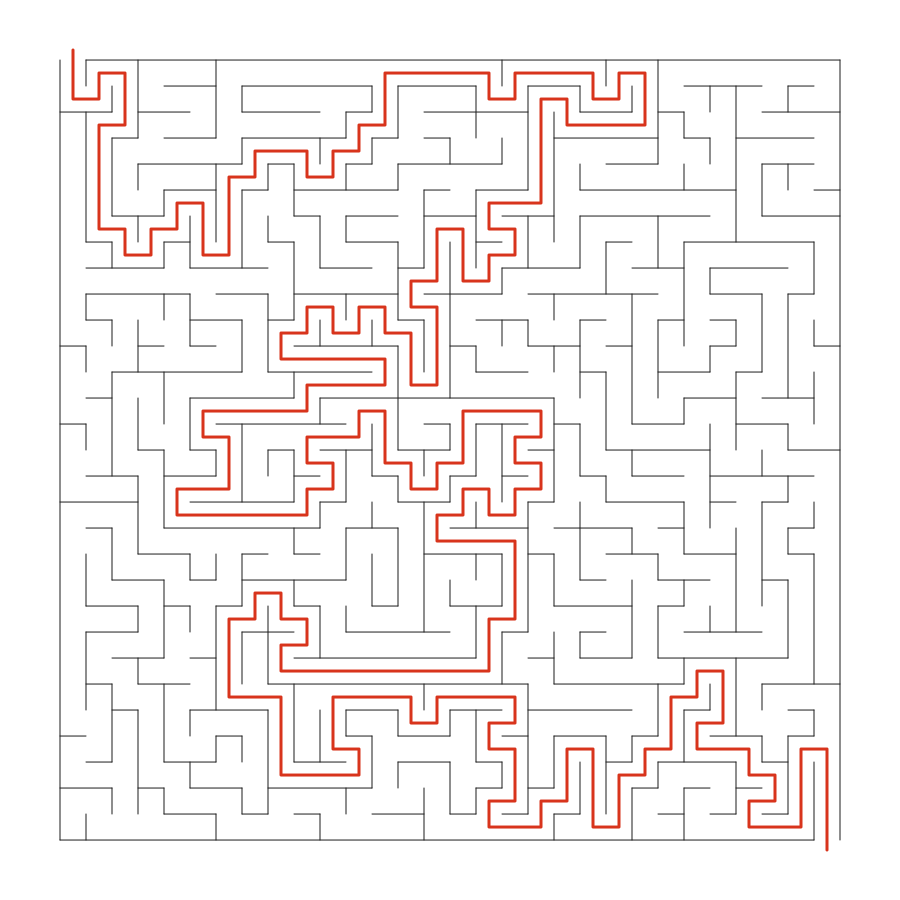
Recursive-backtracker maze of 30 x 30 cells, walls in black with the BFS solution path in red.
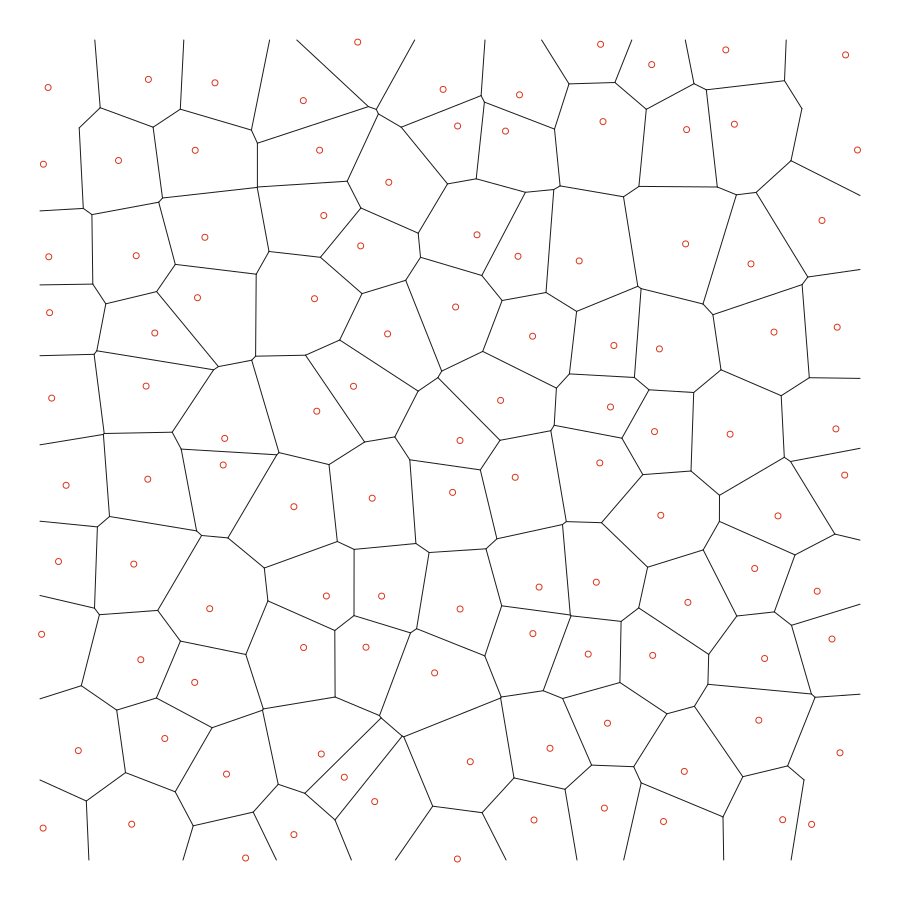
Voronoi cell edges over 110 relaxed seeds, with the seed points dotted in red.
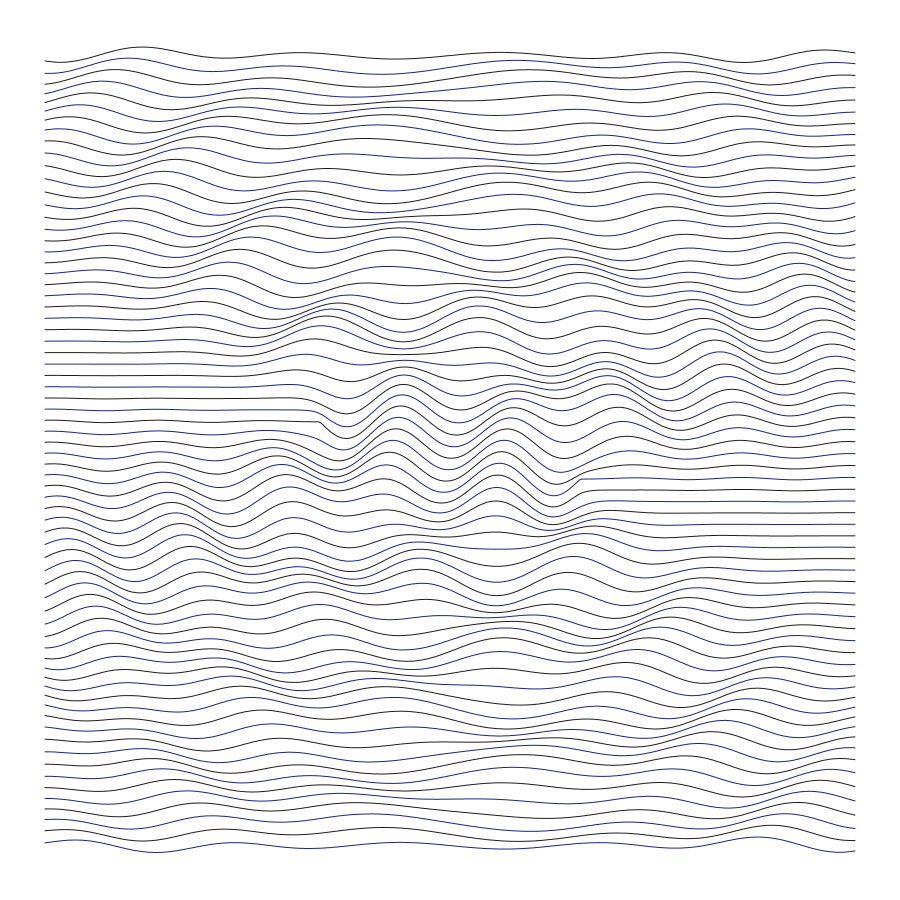
Interference: 70 horizontal lines displaced by two radial wave sources with distance decay.
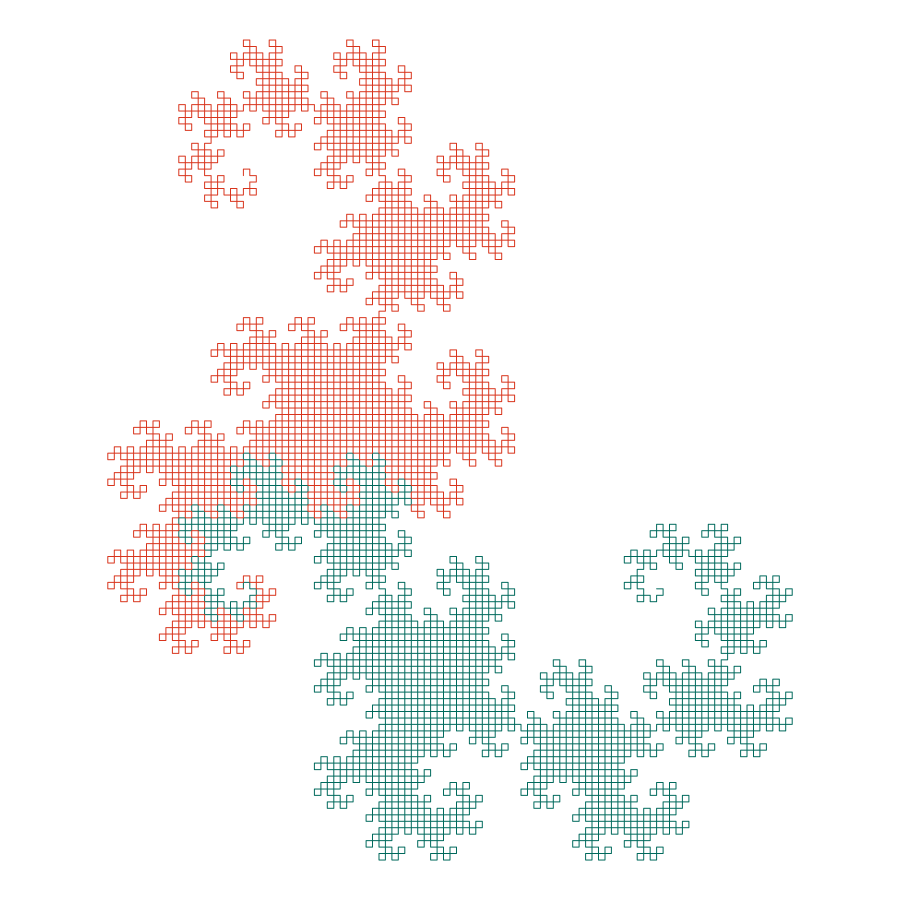
Dragon curve: 13 paper foldings, 8192 segments in one polyline, first half teal and second half red.
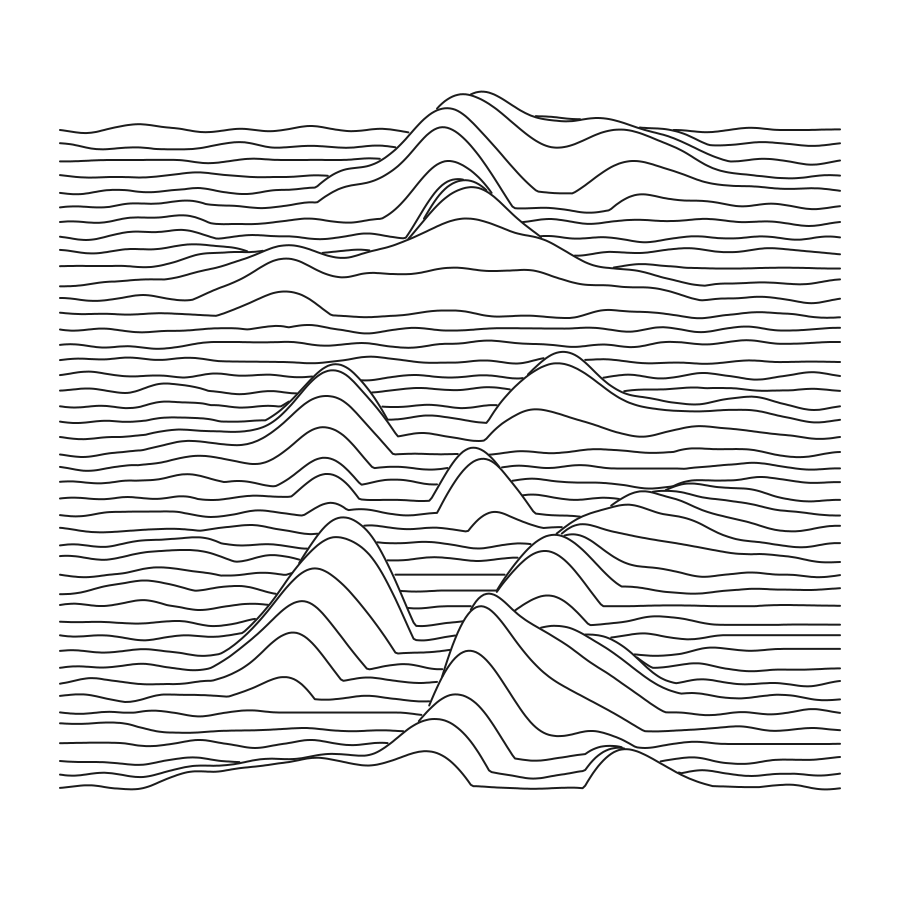
Ridge lines: 44 joy-division ridges from enveloped Perlin terrain with true hidden-line removal.
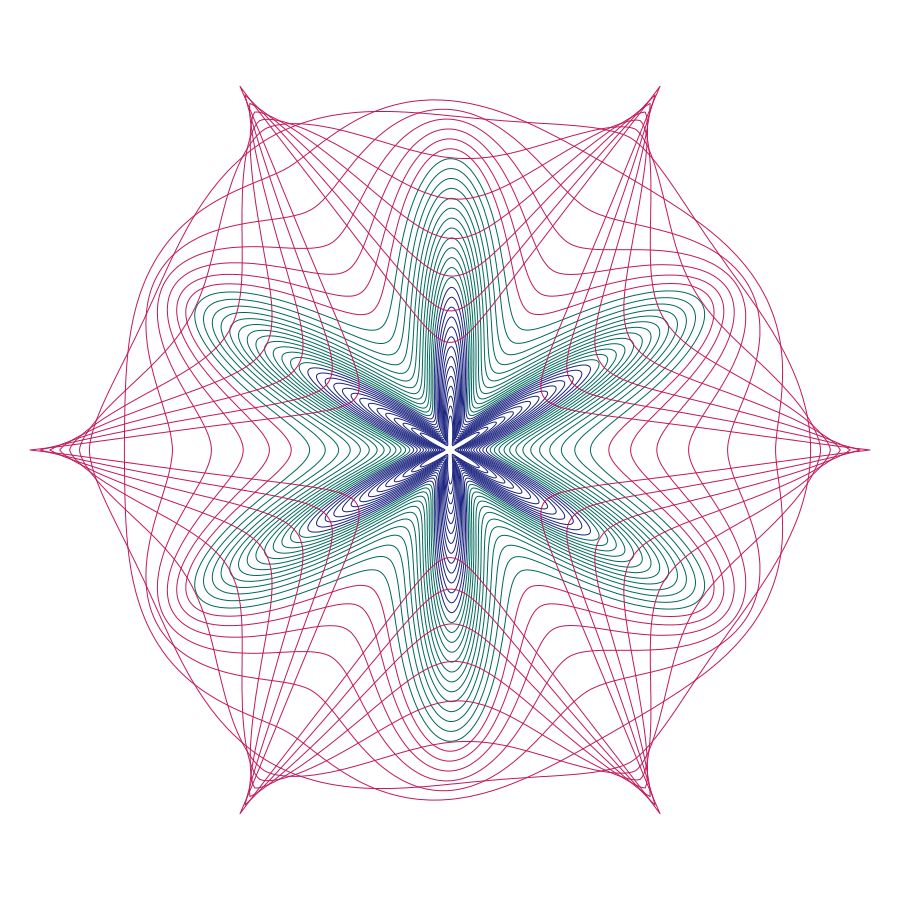
Superformula stack: 40 outlines morphing between two superformula parameter sets, radius 34 to 420 px.
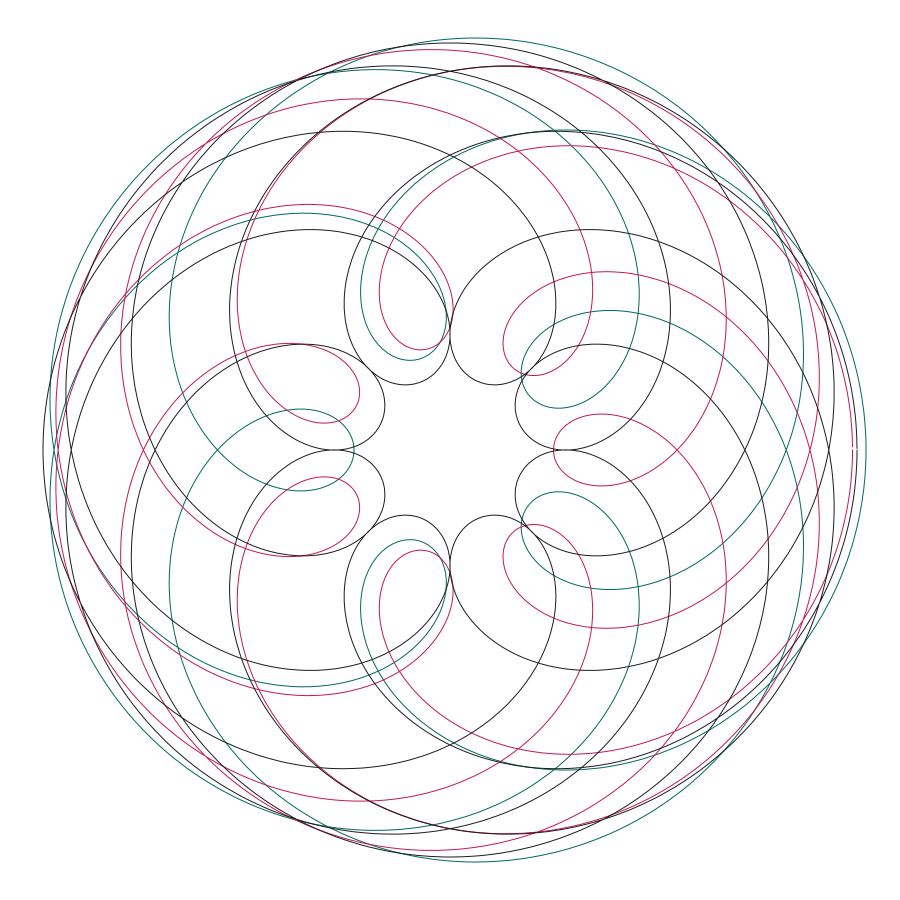
Spirograph: three nested epitrochoids at different scales, each closed exactly.
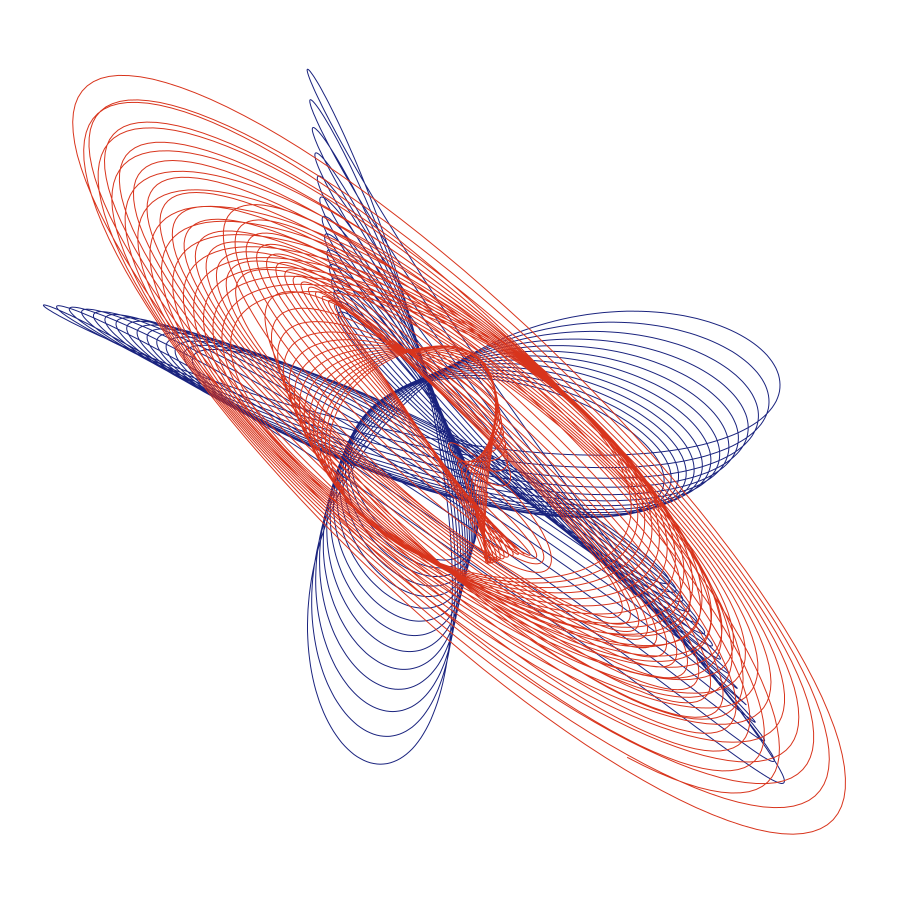
Harmonograph: two damped 4-pendulum traces overlaid in blue and red, near-rational frequency ratios giving the drifting lobes.
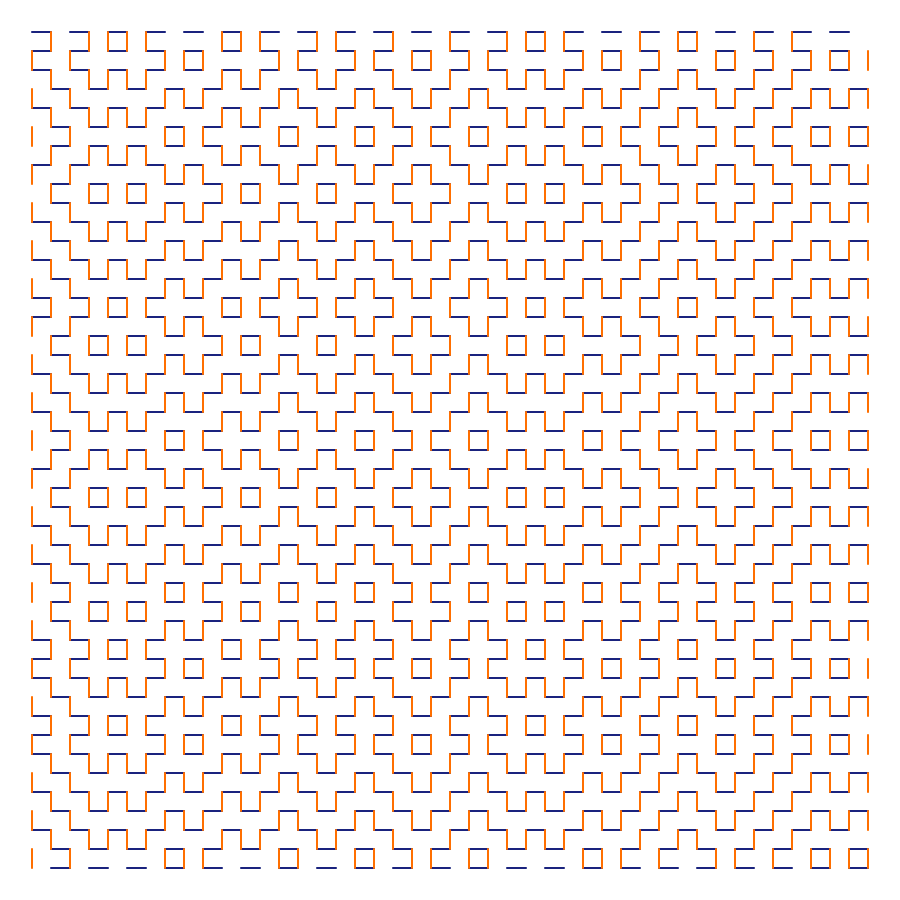
Hitomezashi: a 44 x 44 stitch grid from random row and column bits, horizontal dashes blue, vertical orange.
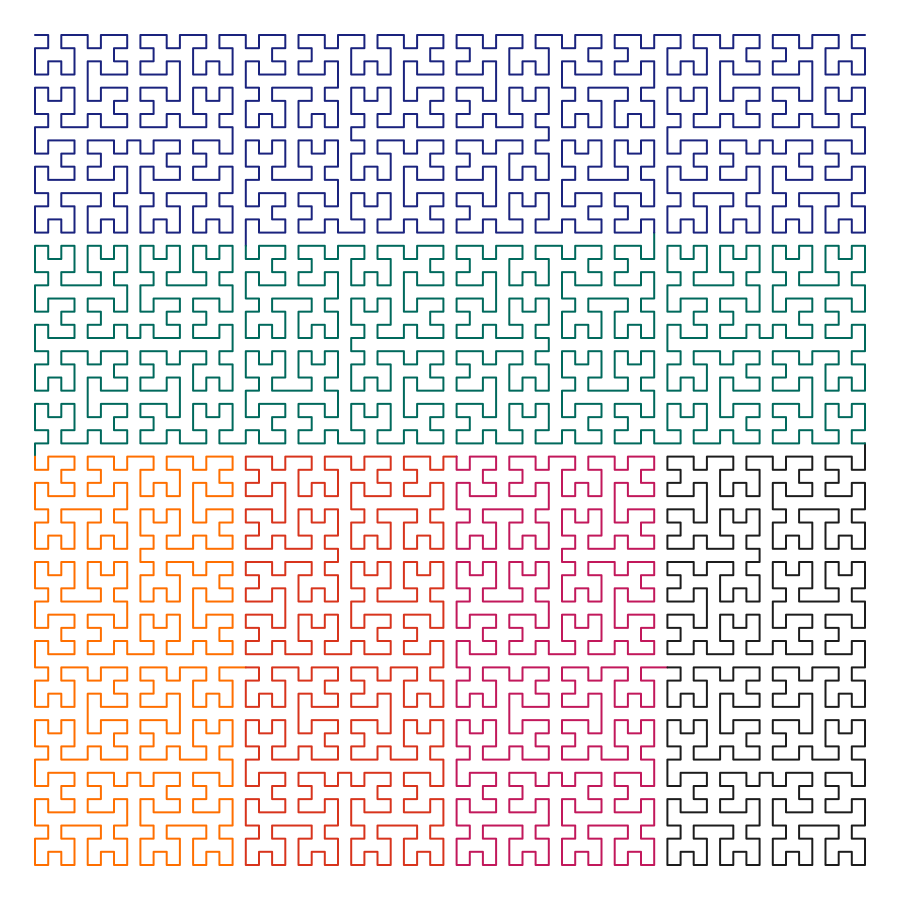
Hilbert curve: order-64 space-filling curve of 4096 points in one continuous route, split into 8 color runs.
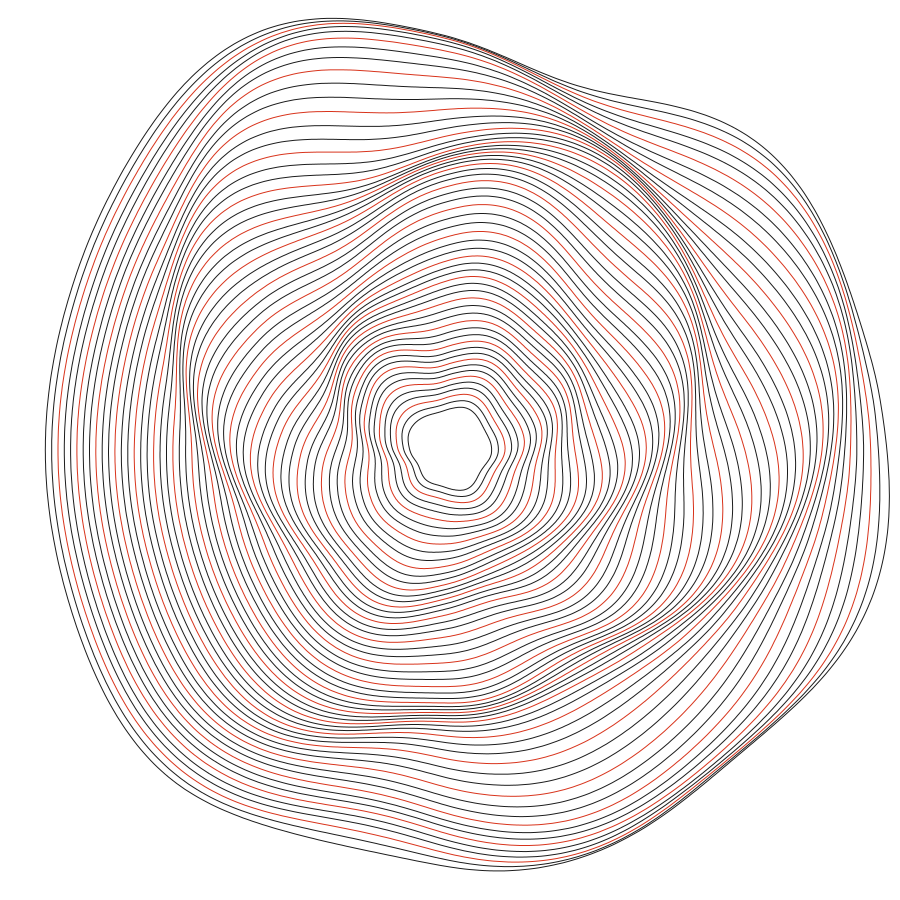
Noise rings: 59 concentric closed rings radially displaced by Perlin noise, wobble growing with radius, every third ring red.
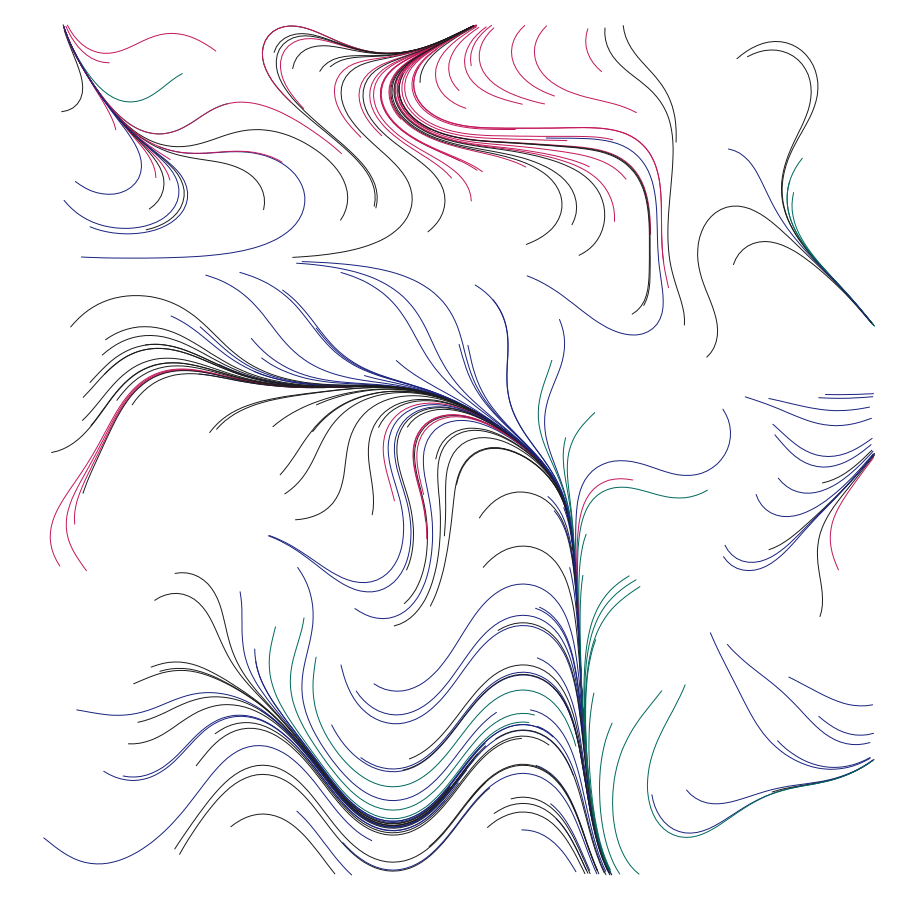
Flow field: 240 streamlines traced through a Perlin angle field, colored by starting quadrant, 1 px lines.
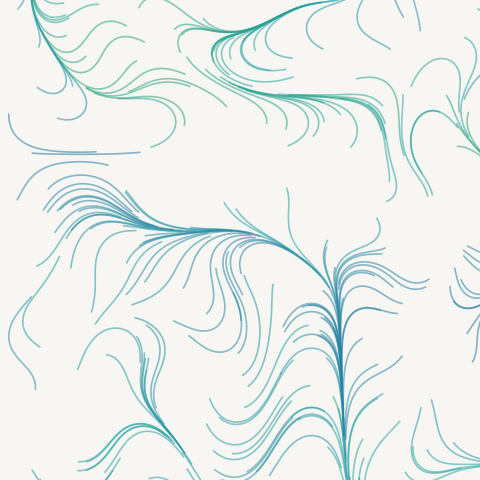
Perlin flow field streamlines: 200 walkers step along perlin2 angles, hue driven by the field.
In the book, 101 Things To Learn in Art School, Kit Long wrote that "The medium is the artwork's first identity. It is secondarily about what it depicts. Form shapes content."